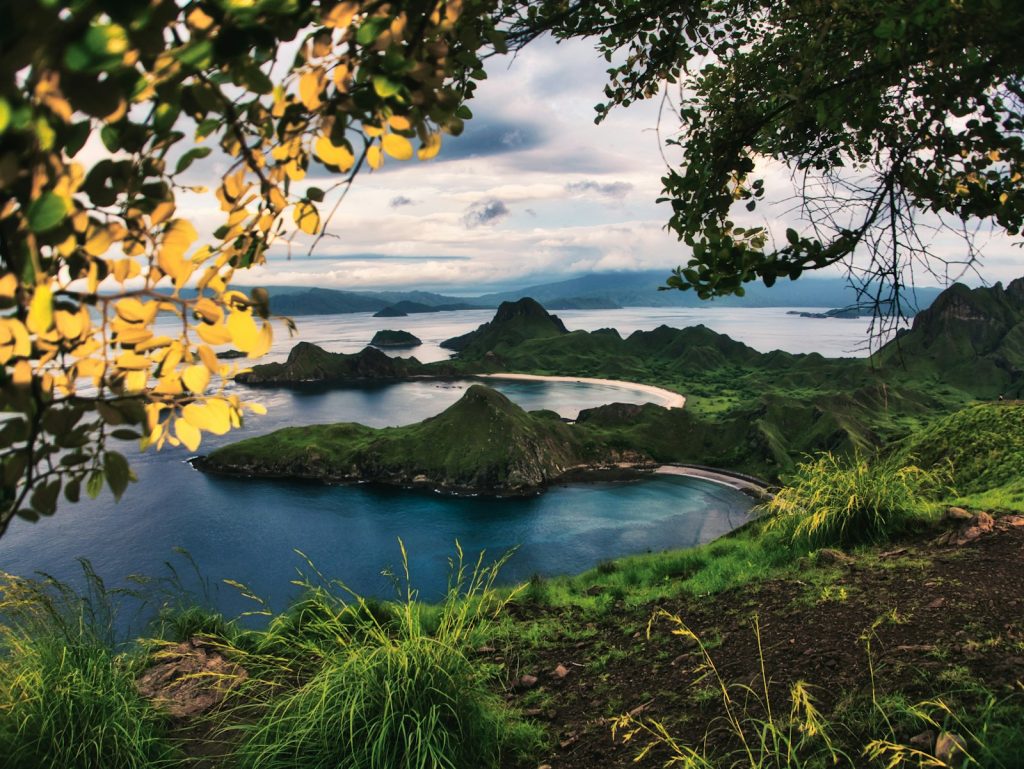
Open trip Labuan Bajo is the local name for a shared boat tour where you join other travellers to explore Komodo National Park. Instead of chartering a private boat, you pay per person and share the route, guide and costs with a small group.
What exactly is an open trip in Labuan Bajo?
In Flores, “open trip” means a scheduled, join-in group tour. Locals also call it a shared tour Labuan Bajo or “sharing trip”.
You’ll see it advertised as:
– Open trip Labuan Bajo
– Open trip Komodo
– Join trip / join tour
– Sharing boat / sharing cabin
Different names, same concept: a fixed itinerary, fixed dates, mixed group.
Core features:
- Per-person pricing: You buy a seat (and possibly a bed), not the whole boat.
- Fixed schedule: Departures are tied to specific days and routes; less flexible.
- Group dynamics: You travel with strangers – could be amazing, could be awkward.
- Shared decisions: Timing and minor route tweaks are for the whole group, not just you.
Most open trips around Labuan Bajo go into Komodo National Park and follow a classic highlight loop: Padar, Komodo or Rinca, Pink Beach, Manta Point and a handful of reefs or sandbars. Day trips use fast boats. Overnights use liveaboard-style wooden boats.
The main open-trip formats (1D, 2D1N, 3D2N)
Across operators, three patterns dominate. Details vary boat to boat, but the skeleton is very similar.
1D Open Trip Komodo (fast-boat day tour)
This is the “do Komodo in one day” option. Long, packed, popular with time-poor travellers.
Typical features:
- Boat type: Fast speedboat from Labuan Bajo harbour or Marina.
- Duration: Around 10–12 hours dock to dock.
- Common stops: Padar Island sunrise or morning hike, Komodo or Rinca for dragons, Pink Beach or Taka Makassar sandbank, Manta Point, sometimes Kanawa or a nearby reef.
- Group size: Often 12–30+ guests depending on the boat and season.
- Meals: Usually lunch + snacks; some include simple breakfast onboard.
Ideal for:
– Travellers with only 1–2 days in Labuan Bajo
– Families or couples who prefer to sleep on land
– Sea-sickness-prone guests who worry about nights on a small boat
Trade-offs:
– Very early start and tiring day
– Less lingering; timings are tight
– Light changes fast for photography, especially in wet season clouds
2D1N Open Trip (short liveaboard)
One night on the boat, two days in the park. A middle ground between “quick sample” and “slow journey”.
Typical structure:
- Departure: Late morning or midday from Labuan Bajo.
- First-day stops: Mix of snorkelling spots (Kelor, Menjerite, Siaba), sunset viewpoint (Kalong mangroves, for example) to see flying foxes.
- Overnight: Anchored in a calm bay inside or just outside the park.
- Second day: Early Padar hike, Komodo or Rinca, Pink Beach or similar, then cruise back to harbour.
Boats may offer:
– Shared cabins (bunk format) with fan or AC at night
– Limited number of private cabins (sold at a supplement)
– Shared bathrooms with simple showers
Good for:
– Travellers who want the “sleep-on-a-boat” experience but don’t love being offline too long
– People intimidated by 3D2N but wanting more than a single day dash
Limitations:
– Still a busy schedule
– Less remote anchorages than on longer trips
3D2N Open Trip (classic Komodo liveaboard)
This is the most common and arguably the sweet spot for an open trip Komodo experience.
Overall rhythm:
- Day 1: Depart late morning; snorkel and beach time near Labuan Bajo; sunset viewpoint.
- Day 2: Iconic stops: Padar at sunrise, Komodo or Rinca, Pink Beach, Manta Point (depending on conditions).
- Day 3: More relaxed snorkelling, sandbanks, small islands; return to Labuan Bajo mid- to late afternoon.
Advantages:
– More chance to adjust if weather shifts or a site is busy
– Slower pace; more time at anchorage to enjoy the sea
– More chances (never guaranteed) to see mantas or turtles across several snorkels
Considerations:
– You’re living in close quarters with your group for 3 days
– Limited freshwater and space; it’s functional, not luxury, unless you book a high-end boat
Open trip vs private boat: which suits you?
Here’s a simple comparison to help you decide.
| Aspect | Open Trip Labuan Bajo | Private Boat Charter |
|---|---|---|
| Cost per person | Lower; cost is shared across group | Higher unless you are a big group splitting charter |
| Flexibility | Fixed route & schedule; limited changes | High; you co-design itinerary and timings |
| Group size | Strangers; 8–30+ depending on boat | Only your family/friends |
| Privacy | Minimal; shared spaces and often shared cabins | Much more; you set the social tone |
| Social experience | Can be fun & lively; chemistry is unpredictable | Intimate with your own group; quieter unless you bring the party |
| Custom needs | Harder to cater for (small kids, specific photography goals, etc.) | Can tailor around kids’ naps, diving, serious photography, etc. |
| Departure dates | You fit their dates | They fit your dates (subject to availability) |
| Value for solo travellers | Excellent: one seat, shared costs | Expensive unless joining others to share a charter |
Open trips work best for:
– Solo travellers and couples on a budget
– Social people who like meeting others
– First-time Komodo visitors who want an easy default route
Private boats work best for:
– Families with young children
– Groups of friends
– Photographers, divers, and those with tight or unusual schedules
– Anyone valuing privacy over price
What you actually get on an open trip boat
Every boat is different, but there are patterns. Labuan Bajo’s fleet runs from very simple backpacker boats up to premium small liveaboards.
Accommodation and cabins
You’ll typically choose between:
- Shared cabin: Bunk beds in a room with 4–8 people, usually mixed or same-gender depending on operator policy.
- Private cabin: Limited number; double or twin; may have a door and sometimes AC at night.
- Deck sleeping: On some budget boats, mattresses on a semi-open deck under a canopy.
What to expect:
– Beds: Simple mattresses, sheets, blanket, pillow. Don’t expect thick hotel mattresses.
– Storage: Small shelves or under-bed space. Pack in a soft bag, not a hard suitcase.
– Noise: Engines, anchor chain, waves, people. Earplugs help.
Bathrooms and showers
Most open trip Labuan Bajo boats offer:
– 1–3 shared bathrooms depending on size
– Western flush or bucket-flush toilets
– Simple showers; water may be brackish rather than perfectly fresh
Freshwater is limited. Many crews will ask guests to keep showers short. Wet wipes and a small microfiber towel go a long way.
Food and drinking water
Food is usually a highlight if you’re flexible. Think home-style Indonesian:
– Rice, noodles, vegetables
– Fish and chicken dishes
– Tempeh and tofu
– Fresh fruit, simple snacks
On more premium shared boats you might see Western-style breakfast options and a bit more variety. Vegetarian can usually be handled if you communicate in advance. Vegan and gluten-free are possible but need clear, early discussion; options may be repetitive.
Potable water:
– Large refillable gallon bottles with a pump or dispenser
– Guests refill their own bottles; bring a reusable one
Soft drinks and beer:
– Often sold onboard at extra cost
– Prices higher than in town (you’re in the middle of the sea)
Safety equipment
Basic safety gear you should see:
- Life jackets for all guests and crew
- Lifebuoys
- Radio and/or phone signal solutions
- First-aid kit
- Fire extinguishers
Some boats also carry:
– Basic oxygen
– Flares
– GPS navigation
Ask before you book. We’ll get into vetting further below.
How an open trip typically runs, day by day
Every operator’s timetable is slightly different, and weather or park regulations may alter things at short notice. Still, most 3D2N shared tours follow a similar rhythm.
Day 1: Leaving Labuan Bajo
– Morning: Check-in at the harbour or a designated meeting point. Pay any remaining balances, get a safety briefing.
– Late morning: Sail out past the harbour towards the first island.
– Midday–afternoon: Snorkelling at one or two spots; maybe a small hike with a viewpoint.
– Sunset: A viewpoint or mangrove to watch flying foxes streaming at dusk (seasonal pattern).
– Night: Dinner, stargazing if skies are clear, early sleep.
Day 2: The “highlight reel”
– Very early: Wake-up call, coffee and simple breakfast.
– Sunrise: Hike Padar Island for those famous ridgelines. Short but steep; dusty in dry season.
– Mid-morning: Komodo or Rinca ranger-guided walk to see Komodo dragons in their natural habitat. Wildlife is never guaranteed; dragons may be more or less active depending on heat and season.
– Afternoon: Pink Beach or a similar coral-sand beach for snorkelling and rest.
– Later: A drift at Manta Point if currents and conditions permit. Manta sightings are common but never promised; sometimes you just get blue water and reef fish.
– Evening: Anchor in a quiet bay; dinner and sleep.
Day 3: Easier pace and return
– Morning: One or two snorkel stops or a sandbank. Often more relaxed; people are tired.
– Lunch: Onboard as the boat points back towards Flores.
– Afternoon: Arrive back in Labuan Bajo; transfer to hotel or airport connections.
Day trips compress much of this into one long day, often swapping the order depending on sea conditions.
Costs: what you’re likely to pay
Prices shift with boat standard, fuel costs, and season. These ranges are indicative only and last verified June 2026.
1D fast-boat open trip (Komodo highlights)
– Budget/standard: often roughly the equivalent of mid-range day-tour prices in Indonesia’s other island hubs, per person
– Mid-range/premium fast boats: higher, with smaller groups and more comfortable seating
What’s usually included:
– Boat, crew, guide
– Lunch, snacks, mineral water
– Basic snorkel gear (mask, snorkel, sometimes fins)
– Harbour taxes (sometimes)
What’s usually not included:
– Komodo National Park entrance and activity fees (these are paid on top, in cash; the structure can change)
– Hotel transfers in Labuan Bajo (some include, some don’t)
– Travel insurance
2D1N and 3D2N open trips
Price ranges vary more because boats vary more. As of June 2026, you’ll generally see:
– Budget shared boats: per-person rates that can be significantly cheaper than a private cabin on a premium vessel
– Mid-range shared liveaboards: higher per night, often with AC cabins and nicer food
Check what your fare includes:
- Accommodation on the boat
- Meals (3 per day plus snacks)
- Coffee/tea and drinking water
- Snorkel gear (quality and availability vary; serious snorkellers often bring their own mask)
And what it doesn’t:
- Komodo National Park fees (entrance, trekking, snorkelling, ranger fees)
- Porterage, tips for crew/rangers
- Soft drinks, beer, extra snacks
- Hotel in Labuan Bajo before/after the trip
Always ask for a clear breakdown before paying any deposit. If you want help comparing today’s going rates against your dates and standards, you can plan your trip with us via email or WhatsApp; we’ll help make sense of current price bands without pressure to book anything.
Pros and cons of a shared tour Labuan Bajo
Open trips are not for everyone. They can be brilliant value or mildly frustrating, depending on your expectations and group.
The upsides
- Value for money: You share fuel, crew and park-time costs across many people.
- Social atmosphere: Easy to meet other travellers; ideal for solos and sociable couples.
- No planning stress: Itinerary is pre-set; you just show up on time with your bag.
- Low barrier to entry: A simple way to “test” liveaboard life before booking a private charter or dive liveaboard.
The downsides
- Group quality is variable: Some groups click; others don’t. You can’t control who else books.
- Less flexibility: If you love a spot, you can’t just stay longer; the schedule rules.
- Party vs quiet mismatch: Boats attract different crowds. A “relaxed” guest might hate late-night music; a party-lover might find a quiet group boring.
- Shared spaces: Limited privacy; you share bathrooms, decks, and often cabins.
- Pace: Open itineraries can feel rushed at peak spots to stay on time.
Honest reality: an open trip Labuan Bajo is somewhere between backpacker adventure and soft expedition cruise. Your own expectations — not just the boat — heavily shape how you feel about it.
How to vet an open-trip boat in Labuan Bajo
The harbour is full of boats and the quality spectrum is wide. You don’t need a luxury yacht, but you do need basic safety and reasonable comfort.
Here’s how to screen a shared tour Labuan Bajo before you pay.
1. Ask specific safety questions
Don’t just ask “Is it safe?”. Instead:
- How many life jackets do you have, and where are they stored?
- Do you carry a first-aid kit, and who is trained to use it?
- Do you have a working radio and backup communication (phone/satellite device)?
- When was the boat last serviced or inspected?
- What is your policy in rough weather – who decides if we sail or not?
You’re not being difficult; you’re being responsible. Reputable operators will answer calmly and specifically.
2. Clarify maximum group size and cabin type
More people means cheaper per person, but also:
– Busier decks and less quiet space
– More competition for the best photo spot or snorkel entry point
Ask:
– What is the maximum number of guests?
– How many cabins and bathrooms are there?
– Is my booking for a private cabin, shared cabin, or deck mattress?
Get the cabin type confirmed in writing (email/WhatsApp).
3. Check what’s actually included
To avoid surprise expenses, request:
- A list of included meals and drinks
- Confirmation on snorkel gear, fins, towels
- Clarification on Komodo National Park fee handling (collected in cash onboard? excluded entirely?)
- Policies on dietaries (vegetarian, etc.)
Ambiguous inclusions are where budget trips suddenly don’t feel so cheap.
4. Read recent, balanced feedback
Instead of only chasing high-star ratings, look for patterns in recent comments:
– Is the same issue (late departures, poor food, engine noise) mentioned repeatedly in the last few months?
– Do guests describe the trip as “basic but safe” or do they mention avoidable safety problems?
Labuan Bajo’s scene changes quickly: boats are upgraded, refitted, sold, or their management changes. Prioritise feedback from the last season.
5. Understand the weather reality
The Komodo area runs on two broad seasons:
- Dry season (roughly April–October): Clearer skies, higher demand, choppier sea at times around July–August.
- Wet season (roughly November–March): More rain and wind spells; some boats pause operations in the heart of the monsoon.
No operator can guarantee flat seas or perfect sun. A good one:
– Is clear about possible changes to route
– Will cancel or re-route if conditions are not safe
– Helps you understand sea-sickness risk (e.g. offering front deck or upper deck advice)
6. Check communication and backup plans
Before you pay:
– How fast and clearly do they reply to your questions?
– Do they have a set plan if minimum numbers are not met? (Join another boat, refund, date change?)
Last-minute boat “switching” happens in Labuan Bajo, especially in shoulder seasons. It’s not always a red flag, but you want clear notice and a similar or better standard boat if substitution happens.
If you’d like a sanity check on an open trip you found, we can help cross-check the format and expectations. Use our plan your trip page to reach us on WhatsApp and we’ll talk through options, not just push the most expensive boat.
Who open trips work best for (and who should skip them)
Open trip Komodo tours are fantastic for some travellers and a poor fit for others. Being honest with yourself saves disappointment.
Great candidates for open trips
- Solo travellers: You get company, shared costs, and usually an easy social setting.
- Couples on a moderate budget: You can spend more on your hotel in Labuan Bajo and still see the park.
- Backpackers and long-term travellers: Basic comfort is fine; value is priority.
- First-timers to Komodo: You want the classic highlights, not a customised route.
People who might prefer private charters or land-based days
- Families with toddlers or very young kids: Nap times, safety concerns, and crowding can make shared boats stressful.
- Very motion-sensitive travellers: A private boat lets you time crossings more carefully and pick calmer anchorages; or consider just day trips with fast boats.
- Photographers and divers with specific goals: You may want slower mornings, golden-hour revisits, or more time on a single reef.
- Travellers who strongly dislike group dynamics: If you know you need control over your environment, a private option is worth the extra cost.
Packing list for an open trip Labuan Bajo
A good packing list makes “simple boat life” feel far more comfortable.
Essentials
- Passport (park checks sometimes request ID)
- Cash in small denominations for park fees, drinks, tips
- Refillable water bottle
- Swimwear + quick-dry clothes
- Light long sleeves and long pants for sun and evenings
- Hat, sunglasses
- Reef-safe sunscreen and lip balm
- Sandals or reef shoes
- Small daypack/dry bag for landings
- Light rain jacket in shoulder/wet season
Comfort and health
- Sea-sickness tablets or patches (start before waves get rough)
- Personal medications
- Basic first-aid (plasters, antiseptic, pain relief)
- Wet wipes and hand sanitiser
- Microfiber towel
- Earplugs and eye mask
Optional but very helpful
- Own mask and snorkel (fit and hygiene)
- Lightweight sarong
- Power bank (electricity can be limited or turned off at night)
- Camera or phone in a dry case
- Small snack stash (nuts, chocolate, etc.)
How to book wisely and minimise surprises
A few final, practical steps to protect your time and money.
1. Lock in dates early in peak months
July–August, local holiday periods, and big international holiday windows tend to fill early. Open trips can:
– Sell out
– Increase in price as boats fill
If your dates aren’t flexible, secure a spot well ahead, especially for 3D2N formats.
2. Clarify cancellation and change rules
Ask for:
– Deadlines for free or low-cost changes
– Policies if the operator cancels (weather, low numbers, technical issues)
– How and when refunds are processed
Weather-related changes are common enough that you want this in writing.
3. Keep your first and last nights on land flexible
Avoid booking open trips that:
– Depart too close to your flight arrival time
– Return just before an onward flight the same afternoon, especially in wet season
Boats can run late due to sea conditions. Give yourself buffer nights in Labuan Bajo both before and after, when possible.
4. Carry contacts offline
Signal can be patchy in the park. Save:
– Operator’s main office number
– Harbour contact or WhatsApp
– Your hotel details
Screenshots help if your phone can’t load emails once you’re in town.
Final thoughts: is an open trip Labuan Bajo for you?
If you:
– Want to share costs,
– Are comfortable with simple boat life, and
– Don’t mind sharing space and schedule with a mixed group,
then an open trip can be a very efficient, memorable way to see Komodo’s islands and reefs.
If you read all of this and feel a knot in your stomach at the idea of shared bathrooms and fixed schedules, that’s useful clarity too. A private boat, or even a series of day trips, might align better with how you like to travel.
If you’d like a second opinion on which approach fits your dates, group and comfort level, use our plan your trip page to message us on WhatsApp. We can walk through current open-trip patterns, realistic budgets, and alternatives before you commit.
FAQs: Open Trip Labuan Bajo
Is an open trip Labuan Bajo safe?
Most open trips operate safely with experienced local crews, but standards vary. Always check for life jackets for every passenger, working communication equipment, a first-aid kit and clear weather policies before you book. Choose operators who are transparent about their boat, maintenance and maximum group size, and avoid last-minute “too good to be true” deals on the pier.
Do I need to know how to swim to join an open trip Komodo?
You can join without being a confident swimmer, but you must tell the crew. Many boats provide life jackets you can wear in the water and can keep you in shallower, calmer snorkel spots. Still, some parts of Komodo have strong currents, so if you are very uncomfortable in the water, you may prefer more land-focused itineraries or a private tour that can adapt stops more closely.
What about Komodo National Park fees on open trips?
Park fees are usually not included in the per-person open trip price and are paid separately, often in cash on the day. The fee structure can change and may differ for foreign and Indonesian visitors, and between activities like trekking, snorkelling and camera use. Ask your operator for a current estimate for your dates and keep extra cash as a buffer.
Can families with children join a shared tour Labuan Bajo?
Yes, many families do, especially with older children who are comfortable on boats and in the water. For younger kids, shared trips can be challenging because of limited space, shared safety responsibility and fixed schedules. Discuss your children’s ages and swimming ability explicitly with the operator, and consider a private charter if you need more control over nap times, meal times and safety boundaries.
How far in advance should I book an open trip?
For travel in July–August, major holidays or long weekends, aim to book several weeks to a few months ahead, especially for 3D2N trips. In shoulder seasons there is often more flexibility, but last-minute booking can still mean fewer boat choices or less favourable cabin types. If Komodo is the focus of your trip, lock in the boat first and plan the rest of your Flores itinerary around those dates.