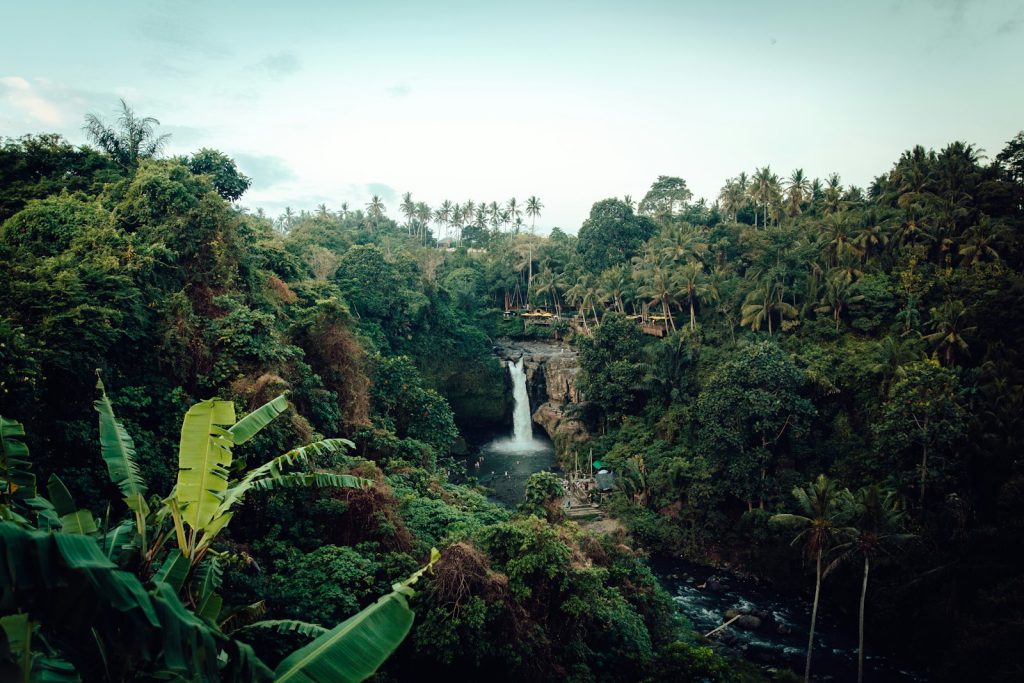
A land tour Labuan Bajo is any trip that swaps boats for roads: caves, waterfalls, villages and sunset hills on the Flores mainland instead of days out at sea. In practice, a land tour from Labuan Bajo usually means hiring a car and driver for half a day or more, then linking 2–4 stops into one loop.
Why do a Labuan Bajo land tour at all?
Most visitors arrive thinking “Komodo and islands only”. They blast through a 1–3 day boat trip, then fly out. That sea-focus is understandable; it also means they miss half of what makes West Flores interesting.
A Labuan Bajo land tour gives you:
- Different pace – no boat engines, less rush, more time to talk to people on the way.
- Cheap variety – caves, waterfalls, village life and viewpoints all within 15–120 minutes’ drive.
- Bad-weather backup – on days when swells make island hopping rough or the port closes, land stays open.
- Cultural contact – from Manggarai coffee and markets to Caci whip-dance at Melo village (on show days).
On this page I’ll walk you through the main things to do on land in Labuan Bajo, how they fit together, and what’s realistic in a half- or full-day. I’m Damianus, Labuan Bajo field correspondent – most of these routes I sit in the passenger seat, clocking times and talking to drivers, guides and village heads.
Key land spots around Labuan Bajo
These are the core mainland stops most visitors combine into a Labuan Bajo land tour:
- Batu Cermin Cave – short, easy, close to town.
- Rangko Cave – sea-cave pool with a short boat hop.
- Cunca Wulang – river canyon, jumps in the wet season.
- Melo village – Manggarai hill village; traditional Caci performances by arrangement.
- Sunset hills – Bukit Amelia, Bukit Sylvia and other low, easy ridges west of town.
- Wae Rebo – remote cone-hut village, 2-day overland from Labuan Bajo.
I’ll break each down with drive times, walking difficulty and typical costs. All time and money figures are based on ground checks and common operator ranges; treat them as guidance, not fixed quotes.
Batu Cermin Cave: the quick-hit karst fix
Batu Cermin (Mirror Rock) is the closest, easiest land stop from Labuan Bajo town.
What it is
A short cave system inside a limestone hill with:
- Boardwalk access through dry forest.
- Narrow passages lit by guide headlamps.
- In the right season and time of day, a shaft of sunlight reflecting off the rock – the “mirror”.
Where it is & drive time
- Located in Batu Cermin village, just inland from the main strip.
- Drive from central Labuan Bajo: about 10–15 minutes by car or scooter, traffic-dependent.
How long to spend
- Walking and cave section: 30–45 minutes at a relaxed pace.
- With photos and a drink at the entrance stalls: 1 hour total.
It works well as a “filler” before airport check-in or combined with another half-day stop.
Tickets, guides & costs
Entry pricing is structured for local, domestic and international visitors, and is usually collected at the small ticket counter before the path. Typical combined entry+local guide range (last verified June 2026):
- IDR ~50,000–100,000 per international adult (rough ballpark).
Bring small bills. A local guide is strongly encouraged; they help with tight passages and point out fossils and formations.
Difficulty & safety
- Short walk on boardwalk and dirt path, light uphills.
- Inside the cave: some low ceilings and narrow bits. You may need to duck and use your hands.
- Not ideal for severe claustrophobia, knee problems or anyone unsteady on uneven surfaces.
Wear trainers or sandals with decent grip, not beach flip-flops. It can feel hot and humid inside.
Best time of day
The famous “mirror” effect depends on sunlight hitting the rock at a certain angle. Guides on site track this by month; broadly:
- Mid-morning to late morning gives you the best chance in the dry season.
- Cloudy days mean softer light; you still see the cave but less drama.
Rangko Cave: tidal pool in a limestone chamber
Rangko Cave is a saltwater pool inside a cavern, reached by road plus a short fishing-boat ride.
Where it is & how to get there
- Rangko village lies northeast of Labuan Bajo on the coast.
- Drive from town: roughly 45–60 minutes by car each way, depending on roadworks and traffic.
- From Rangko village you transfer to a local boat (wooden, outboard) for around 10–15 minutes to the cave landing area.
Time needed
- Transport from town and back: 2–2.5 hours round-trip.
- At the cave: 1–2 hours to swim, climb, rest and photograph.
- Total typical Rangko-focused tour: about 4 hours hotel to hotel, half-day.
Tickets, boat fees & ranges
Exact figures change with fuel prices and village agreements; expect roughly (last verified June 2026):
- Entrance fee: local ticket at or near the village / cave path.
- Boat charter: usually priced per boat, not per person. Small groups pay less per head when sharing.
For budget planning, many travellers end up in the range of IDR ~150,000–300,000 per person all-in for Rangko if 3–4 people share a car and boat, excluding hotel pick-up margins by agencies. Ask for a breakdown when you plan your trip by WhatsApp so you see what goes to the driver and what goes to the village boat crew.
What to expect at the cave
- Short rocky path down from the landing to the cave entrance.
- Steep wooden or bamboo steps into the cavern; can be slippery.
- Salty, clear water pool; some spots deep enough to swim, some shallower ledges.
- Light levels change with time of day – sometimes golden beams, sometimes darker blue.
There are usually basic stalls in the village selling drinks and snacks; don’t count on full meals or reliable phone signal inside the cave area.
Best time & tide
- Midday to early afternoon gives more direct light into the entrance in many months.
- At higher tide the water level in the pool changes; check with local boatmen on the day as they know current conditions.
Safety & suitability
- Access ladders and rocks can be slick. Hold the handrails; move slowly.
- No lifeguards. Weak swimmers should use a life vest (ask your driver/boatman to bring or arrange in town).
- Not recommended for infants or those with serious mobility issues due to steep entry.
Cunca Wulang: river canyon, jumps in season
Cunca Wulang is the best-known waterfall near Labuan Bajo, set in a narrow canyon with river pools. In the wet months it’s a place for short cliff jumps (on the right days), in the dry months more a river walk.
Where it is & drive time
- Located inland in Mbeiling area, east of Labuan Bajo.
- Drive from town: usually 1–1.5 hours each way depending on road conditions and traffic leaving town.
The trek
- From the village ticket post, expect a walk of about 30–45 minutes each way.
- Path crosses small farms, then drops down to the river.
- In the canyon itself you may walk on wet, smooth rocks or in shallow water.
Distance and difficulty vary with which pools are safe and accessible at the time. Local guides decide based on rainfall and river level.
Seasonality: wet vs dry
- Wet season (roughly Dec–Apr): fuller waterfalls, sometimes fast current. Jumps usually from 2–5 m in safe zones guided by locals. Heavy rain can make it unsafe; village may close access temporarily.
- Dry season (roughly May–Oct): lower flow, greener cliffs, more rocks exposed. Less power in the falls; sometimes you climb and explore rather than jump.
Always take the word of local guides over your own assessment. They know the hydraulics of that river better than any visitor.
Entry, guiding & ranges
- At the village you pay an entrance fee plus a local guide fee (often per group).
- Expect to spend roughly IDR ~100,000–200,000 per international visitor in combined tickets and guide contributions (last verified June 2026), depending on group size and negotiation.
What to bring
- Closed shoes with good grip that can get wet (or sturdy sandals).
- Swimwear under your clothes.
- Dry bag for phone and camera; simple waterproof pouch is often enough.
- Change of clothes and a towel waiting in the car.
Safety notes
- No jumping or diving without explicit guide approval. Rocks shift, pools change depth.
- River level can rise quickly after mountain rain. If locals suggest leaving, leave.
- Leeches and insects can appear in the wetter forest; long socks or repellent help some guests feel more comfortable.
Melo Village & Caci: Manggarai culture in the hills
Melo is a Manggarai village on the ridge east of Labuan Bajo, known for views and traditional Caci whip-dance performances organised for visiting groups.
Where it is & drive time
- Located along the Trans-Flores road heading towards Ruteng.
- Drive from Labuan Bajo: roughly 45–60 minutes uphill by car.
Village visit without performance
You can visit Melo simply to:
- Meet villagers and see traditional-style houses.
- Drink local coffee and palm wine (arak) if offered.
- Enjoy views back over the coast and islands on clear days.
There is usually a modest village contribution or informal donation box. Ask your driver to help confirm the appropriate amount before you arrive so expectations are aligned.
Caci whip-dance performance
Caci is a ritualised whip-fight between costumed men holding round shields. Today it is mostly performed for ceremonies and for visitors on arranged days.
- Performances must be pre-booked – villagers do not stage Caci every day.
- Costs are generally set per group, not per person, and include the dancers’ time, music and shared snacks.
- For small groups, expect per-person contributions to land somewhere in the IDR ~250,000–500,000 area (last verified June 2026) once costs are split. Larger groups pay more overall but often a similar or lower per-head amount.
The show typically includes a welcome, optional simple ceremony, and time after to talk, ask questions and take photos. Respect is key: dress modestly (shoulders and knees covered), follow your guide’s lead in any ritual spaces, and ask before photographing elders.
Best time & pairing
- Morning visits are cooler and can be combined with Cunca Wulang afterwards (or vice versa).
- Afternoon visits can end with sunset on the ridge or back at a Labuan Bajo viewpoint.
Sunset hills around Labuan Bajo
Labuan Bajo’s bay and the outer islands line up beautifully under evening light. A low-key Labuan Bajo land tour can be as simple as a 20-minute drive to a hill and a slow walk to the top.
Common sunset spots
- Bukit Amelia – north of town; rolling grassy ridges with views over the islands.
- Bukit Sylvia – west of town; views towards the sea and mainland coast.
- Other unnamed low hills along the coast that drivers know for quiet vantage points.
Drive times & walking
- Drive from central town: most hills are within 15–30 minutes by car or scooter.
- Short climbs of 5–15 minutes from parking to ridgeline on dirt paths or tracks.
Tips
- Bring water; there are not always kiosks up top.
- Wear light shoes; the ground can be dusty and slippery on the way down.
- Sun can still be strong for the first part of the climb; a hat helps.
- After dark, use your phone torch on the descent.
Wae Rebo overland: 2 days beyond Labuan Bajo
Wae Rebo is a remote Manggarai village famous for its cone-shaped houses (mbaru niang) and early-morning cloud views. From Labuan Bajo it’s a minimum of a 2-day land trip; many of the more curious travellers extend to 3–4 days to include Ruteng and other highland stops.
Basic itinerary from Labuan Bajo (2D/1N)
This is the simplest Wae Rebo route many operators and private drivers arrange:
- Day 1
- Morning departure from Labuan Bajo by private car.
- Drive 4–6 hours east towards Denge area (road time depends heavily on construction, traffic and break length).
- Short rest, then start the hike (often 2.5–4 hours uphill depending on fitness, weather and trail conditions).
- Arrive Wae Rebo village before dark, settle into shared guest hut, simple dinner, early night.
- Day 2
- Early morning in the village: coffee, possible light fog over the valley.
- Simple breakfast, farewell ritual, then hike back down to the trailhead (2–3 hours).
- Car back to Labuan Bajo with lunch stop and short photo breaks; arrive late afternoon to evening.
Road & hike details
- Road: paved most of the way but winding and sometimes potholed. Motion-sickness-prone guests should prepare accordingly.
- Trail: forest path with consistent uphill, tree roots, and sometimes mud. No technical sections but you should be able to walk upwards for a few hours with a small pack.
Accommodation & contributions
- Visitors typically sleep in a shared guest house in the village, on mats under mosquito nets.
- Meals are simple village food; dietary restrictions should be communicated in advance through your organiser.
- The village has a structured visitor contribution that covers accommodation, meals and a community fund. Organisers usually bundle this cost into your package; ask for a line item.
Costs & organisation
Total spend depends on group size and vehicle type. For a private 2D/1N trip from Labuan Bajo including car, driver, basic guiding, village contributions and simple meals, it is common to see ranges of IDR ~3,000,000–5,000,000 per person for 2–3 people sharing (last verified June 2026). Larger groups split vehicle costs more ways and often pay less per person.
This is not the cheapest experience in Flores, but it is one of the most distinctive. If you want help choosing between Wae Rebo and more day-focused land tours, send rough dates and fitness level via WhatsApp through plan your trip and we can sketch options.
How to combine Labuan Bajo land highlights
Now the practical bit: how to turn these spots into realistic days out.
Half-day options from Labuan Bajo
Half-days work best for nearby or single-focus sites.
- Batu Cermin + Sunset Hill (Easy)
- Morning or late afternoon. 1 hour at Batu Cermin, coffee break, then short drive to a hill like Amelia or Sylvia for sunset. Gentle walking; good with kids or flight days.
- Rangko Cave Swim (Active but short)
- Depart mid-morning or just after lunch. Drive to Rangko village, boat across, 1–2 hours at the cave, back to town before or just after sunset.
- Labuan Bajo “Town & Hills” Sampler
- Short town walk (harbour, market) then a drive to a hill for sunset. Minimal logistics, more about atmosphere than specific sights.
Full-day Labuan Bajo land tour combinations
Full days (8–10 hours) let you string two or three major stops. Here are realistic combos:
- Cunca Wulang + Melo Village
- Morning drive to Cunca Wulang, trek and swim (3–4 hours), lunch at a local warung, then continue uphill to Melo for coffee, views and possibly a pre-arranged Caci show. Back to Labuan Bajo early evening.
- Rangko Cave + Batu Cermin + Sunset
- Start with Rangko mid-morning, return to town by mid-afternoon, stop at Batu Cermin on the way in, then end on a hill for sunset. Moderate walking and stairs, lots of short segments.
- “Flores Taster” High-road Loop
- Drive up the Trans-Flores road, stopping at Melo and a few viewpoints, possibly a waterfall or village depending on agreements and weather. Less fixed than other combos; shaped around your interests (photography, coffee, culture).
Sample timing table from town
| Destination | One-way drive time from Labuan Bajo (approx.) | On-site time usually needed | Typical trip type |
|---|---|---|---|
| Batu Cermin | 10–15 minutes | 45–60 minutes | Short stop / add-on |
| Rangko village (for cave) | 45–60 minutes | 2 hours at cave incl. boat | Half-day |
| Cunca Wulang | 60–90 minutes | 3–4 hours (trek + swim) | Full-day combo |
| Melo village | 45–60 minutes | 2–3 hours (longer with Caci) | Half-day / full-day combo |
| Sunset hills (Amelia / Sylvia) | 15–30 minutes | 1–2 hours | Short add-on |
| Wae Rebo trailhead area | 4–6 hours | Overnight in village | 2-day overland |
Times are approximate and skew conservative to account for photo stops, slow trucks and unplanned breaks.
Car, driver & guide: how Labuan Bajo land tours really work
For most visitors, a labuan bajo land tour means a private car plus driver. Group “join-in” land trips exist but are less standardised than shared Komodo boats.
Car & driver basics
- Vehicles are usually 5–7 seat MPVs or small SUVs with AC.
- Drivers typically price per car per day, not per passenger.
- Fuel is included in most day quotes; overnight trips may specify fuel separately.
- Parking fees and village entrance charges are often extra and paid on the spot.
Typical car+driver ranges
These are ballpark numbers seen in Labuan Bajo for private use with licensed local drivers (last verified June 2026):
- Half-day (up to ~5 hours): around IDR ~600,000–900,000 per car.
- Full-day (up to ~10 hours): around IDR ~900,000–1,400,000 per car.
Factors that push rates up:
- Longer distances (e.g. Cunca Wulang + Melo in one day).
- Early-morning or late-night starts/finishes.
- High season months and public holidays.
For multi-day Wae Rebo and Flores loops, drivers generally quote a package covering all driving days plus food/accommodation for themselves.
Do you need a separate guide?
It depends on your comfort level and destination:
- Batu Cermin, Cunca Wulang, Wae Rebo, many villages: local site guides are either mandatory or highly recommended and are usually arranged on arrival.
- Drivers: some speak conversational English and can explain basics; others are more limited. They are not cultural experts but can translate simple interactions.
- Dedicated guide: useful if you prefer one person to interpret, manage timings and mediate etiquette across all stops.
Booking tips
- Clarify what’s included: car, fuel, driver only, or also entrance tickets, village contributions and lunch?
- Share your exact wish-list of stops and let the driver react; they know which combos are realistic in a day.
- Ask about road conditions and any current closures or events at villages and sites.
If you want sample day-route quotes from trusted drivers, we can connect you; use WhatsApp via plan your trip and mention which places on this page interest you most.
Money, tickets & what to carry
Cash vs cards
- Carry cash. Villages and small attractions almost always work on cash only.
- ATMs are concentrated in Labuan Bajo town; do not rely on finding one out in the hills.
- For a full-day land tour with 2–3 attractions and meals, a common comfort amount is IDR ~400,000–700,000 per person in cash (excluding Wae Rebo). That covers tickets, basic meals, and some coffee/snacks.
Entrance & village fees
Flores sites often use tiered pricing and community contributions:
- Separate rates for local, domestic and international visitors.
- Local guide requirement at natural sites (especially rivers and caves).
- Village funds to support infrastructure and ceremonies.
Ask your driver or guide to tell you beforehand what they expect ticket ranges to be that day; this avoids awkward moments at the counter.
What to pack for a land day from Labuan Bajo
- Light daypack.
- 2–3L water per person (or money to buy bottles on the way).
- Sun protection: hat, sunglasses, sunscreen.
- Footwear: closed shoes/trekking sandals for Cunca Wulang or hill walks; sandals fine for Batu Cermin and Rangko.
- Swimwear, small quick-dry towel.
- Rain jacket or poncho in wet months.
- Phone, power bank, small dry bag for water sites.
Is a land tour Labuan Bajo right for you?
Different travellers value different things. Here’s a simple lens to decide.
You’ll enjoy Labuan Bajo land tours if you:
- Like varied days – a bit of walking, a bit of water, some culture, not just beach lazing.
- Want a counterweight to structured boat itineraries.
- Are curious about Manggarai life beyond the harbour and dive shops.
You might skip or shorten land tours if you:
- Have very limited time (e.g. 1 full day in Labuan Bajo total).
- Get car-sick easily on winding mountain roads and don’t want to medicate.
- Are visiting in the height of the wet season and mainly want reliable, dry activities (though caves and villages still run, you just get wetter in transit).
Balancing sea and land days
- 2–3 total days in Labuan Bajo: 1–2 days on the water, 0.5–1 day on land.
- 4–5 days: 2–3 sea days, 1–2 land days (Rangko, Cunca Wulang, Melo, sunset).
- 6+ days: consider a 2D/1N Wae Rebo overland plus one extra land day or half-days around town.
Planning your own Labuan Bajo land itinerary
To pull this together:
- Decide how many land days you want vs Komodo/island days.
- Choose your “musts” from:
- Easy: Batu Cermin, sunset hills.
- Wet adventure: Cunca Wulang, Rangko.
- Culture: Melo village, Caci show (pre-arranged).
- Deep culture & hiking: Wae Rebo.
- Check fitness and comfort levels for hikes and drives, especially for older family members or kids.
- Estimate budget using ranges above (car+driver, tickets, meals, any overnight).
- Lock in time-critical elements first: Wae Rebo nights, Caci days, then fill gaps with flexible half-days.
If you’d like a local set of eyes on your draft plan, or sample daily budgets with up-to-date fee info, send your dates and rough preferences through WhatsApp via plan your trip. No one can pay to change what we publish; if you proceed with our partner they may pay us a referral fee at no extra cost to you.
FAQs: Labuan Bajo land tours
Can I do Labuan Bajo land tours by scooter instead of car?
Yes, for short distances and if you are an experienced rider used to Indonesian traffic. Batu Cermin, sunset hills and even the road towards Rangko are scooter-accessible in dry conditions. For longer, steeper or wet-season routes like Cunca Wulang, Melo and Wae Rebo approaches, a car with local driver is safer and more comfortable, especially with luggage or kids.
Is it possible to visit Wae Rebo as a day trip from Labuan Bajo?
Practically no. The combined drive and hiking times make it unsafe and rushed to attempt up and down in a single day from Labuan Bajo. Plan at least 2 days and 1 night, or start/end in another Flores town like Ruteng if you are crossing the island.
Are Labuan Bajo land tours suitable for young children?
Many are. Batu Cermin, Melo without long hikes, and sunset hills are manageable for primary-school-age kids with supervision. Cunca Wulang and Rangko involve more slippery rocks and water; younger children need close attention and may skip jumps or deeper sections. Wae Rebo’s hike is long for very small kids unless you go slowly and start early.
Do I need to book Labuan Bajo land tours in advance?
For simple half-days like Batu Cermin and sunset hills, arranging a car a day before is usually enough. For Cunca Wulang, Rangko and combined routes in high season, book at least a day or two ahead to secure a driver. For Wae Rebo and Caci shows at Melo, advance planning is strongly recommended so the village can prepare and you can align overnight logistics.
Can I fit both a Komodo boat tour and a land tour in one day?
Only if the sea trip is a short morning or afternoon charter. Standard full-day Komodo trips run 8–10 hours, leaving little slack. Many travellers instead pair a full boat day with only a quick pre-sunset hill visit. To do justice to land sites like Cunca Wulang or Rangko, dedicate a full separate day or at least a protected half-day.