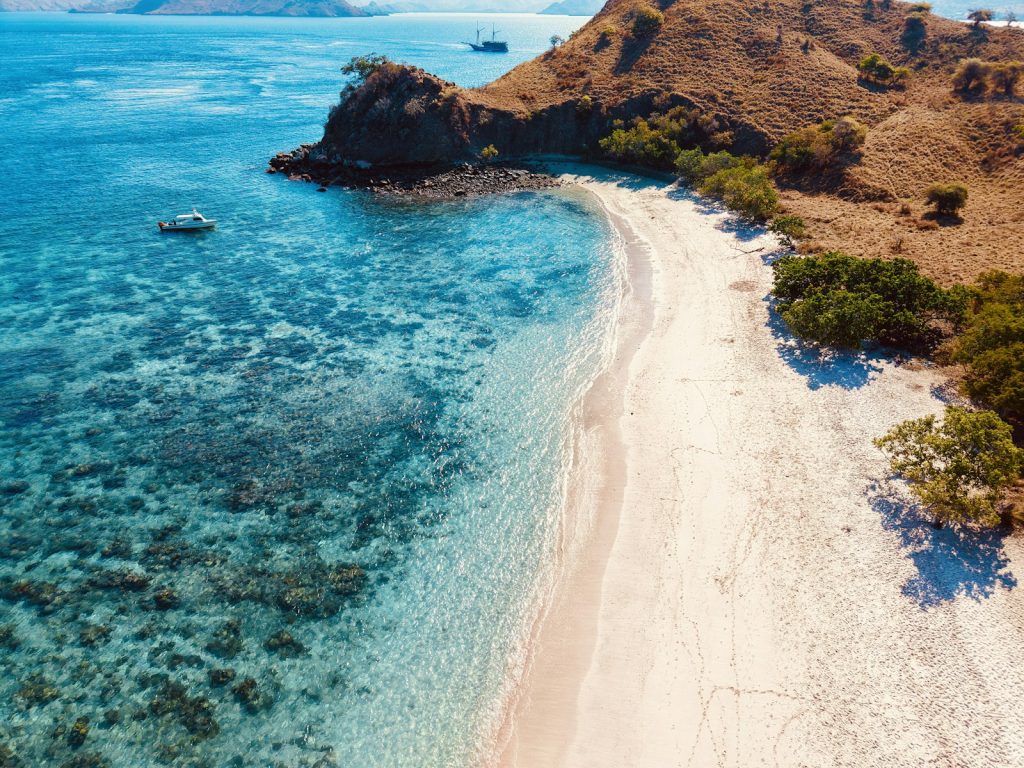
The padar island hike is a short, stepped trail up a ridgeline on Padar Island that overlooks three different bays in Komodo National Park. It’s the classic Komodo postcard: sharp hills, curved beaches and, in the right season, three different colours of sand.
I’m Damianus, field correspondent for Labuan Bajo Tours. Below is the on-the-ground guide I wish every guest had read before setting an alarm for 03:30 and wondering why they’re climbing stairs in the dark.
Where Padar Island Fits into a Komodo Trip
Padar sits roughly halfway between Labuan Bajo and Komodo Island itself, inside Komodo National Park in East Nusa Tenggara. On almost every standard route, the padar island hike is the “viewpoint stop” that balances your dragon walk, manta snorkel and beach time.
Typical routes that include Padar
From what we see day in, day out, Padar is most often included in:
- Day trips from Labuan Bajo – usually 3–4 stops: Padar Island viewpoint, Komodo or Rinca dragons, Pink Beach/snorkel, plus one more snorkel site.
- 2D1N and 3D2N boat trips – Padar is often the first morning or second morning hike, paired with multiple snorkel sites and at least one dragon trek.
- Private charters and liveaboards – Padar is almost always on the map unless you’re doing a very dive-focused route that trades hikes for extra sites.
Access is only by boat. There is no accommodation on Padar. You sleep on your boat or back in Labuan Bajo.
The Padar Island Hike in Numbers
Let’s start with the basic facts of the padar trek as it is today (trail and steps were upgraded a few years ago and are still changing slowly).
- Trail type
- Concrete and stone steps + dirt path along the upper ridge
- Approximate number of steps
- 400–700 depending how high you go; the classic viewpoint is reached in around 450–500 measured steps from the beach area
- Elevation gain
- Roughly 160–200 m from the beach to the main padar island viewpoint ridge
- Time up
- 20–40 minutes for most reasonably fit people; guides budget 30 minutes
- Time down
- 15–30 minutes; longer if you stop often for photos
- Trail length (one way)
- About 700–900 m depending where you stop on the ridge
- Difficulty
- Short but hot; easy-to-moderate if you’re used to walking stairs, harder in peak sun and for anyone with knee issues
- Best time
- Sunrise or late afternoon; crowds heaviest at sunrise in dry season
The numbers change a little as erosion repair adds or removes steps, but the feeling stays the same: it’s not a mountaineering expedition, it’s a sweaty stair climb with a big payoff at the top.
How the Padar Island Viewpoint Hike Actually Works
Arrival and park logistics
Your boat anchors or moors off the main Padar landing area on the northeast side of the island. From there:
- A small tender (or your tour’s dinghy) brings you to the beach.
- You’ll pass a cluster of simple stalls and a ranger post area where your guide sorts the Komodo National Park tickets and local fees for the day, if they weren’t handled earlier.
- From the sand, you can already see the staircase cutting up the hill.
National Park fees and exact breakdowns change and are often bundled into your tour price. Ask your operator to confirm your total per day in the park; recent visitor ranges we hear about are in the low hundreds of thousands of rupiah per person per day (last verified June 2026), varying by nationality, day of week and how many sites you visit.
The lower section: steady stairs
The first half of the padar island hike is the most structured:
- Wide concrete and stone steps, in mostly good condition.
- Some low handrails on sections, but not on every side.
- Little or no shade except a few small shelters on the way up.
You’re climbing steadily but not scrambling. This is the part where most people realise they started the day a bit too fast.
The mid section: viewpoints and photo pauses
About 10–15 minutes in, you hit your first wider platform. It already gives a nice angle of the nearest bay and surrounding hills. For many older travellers or parents with small kids, this first or second platform is “high enough”. No shame in that; it’s still a good view.
The upper ridge: dirt path and the classic three bays
Beyond the stair platforms, the trail narrows and turns into:
- Packed dirt and gravel with some uneven or eroded sections.
- A more exposed ridgeline, with drop-offs to the sides but enough room to walk comfortably if you watch your footing.
- A few informal photo spots where guides know the angles for the classic three-bay shot.
The “standard” padar island viewpoint is a short walk along this ridge from where the steps end. Your guide will call it out. Many people go a little higher or further along for less crowding, but the basic composition — three curved bays, dry ridges like dragon backs — is already locked in from here.
How Hard Is the Padar Trek, Really?
From the ground, I’d rate the padar trek as:
- Cardio: Short but intense if you’re not used to heat or stairs. You will sweat.
- Technical: Low. No ropes, no scrambling, just steps and a dirt ridge.
- Exposure: High sun, little shade, breezier up top; some people are nervous on the narrow sections.
Who usually finds it easy
- Regular walkers and hikers.
- People used to step machines or office stairwells.
- Teens and kids used to being outdoors; they often run ahead.
Who often struggles
- Travellers with heart or serious respiratory issues (talk to your doctor before the trip).
- Anyone with knee problems (especially going down the stairs).
- Visitors unused to tropical heat who start late in the morning and rush.
We regularly see guests in flip-flops make it up and down. That doesn’t mean it’s wise. Strong sandals or trainers make a big difference on the loose gravel near the top.
Sunrise vs Daytime vs Afternoon on Padar
This is one of the most common planning calls: padar sunrise mission, or a more civilised daylight hike? There’s no single right choice. Here’s how it plays out on the water.
| Time | Pros | Cons | Who it suits |
|---|---|---|---|
| Sunrise | Cooler, softer light, classic orange glow, often clearer skies | Very early start, crowded platforms, dark first section, sleepy kids | Photographers, early risers, anyone focused on “the shot” |
| Mid-morning | More sleep, fewer boats than peak sunrise in some seasons | Hot, harsh top-down light, more haze, tougher climb for many | Guests who dislike dark hikes and don’t prioritise photos |
| Late afternoon | Softer light, cooler again, sometimes fewer crowds than sunrise | Risk of afternoon showers in some months, schedule clashes with other stops | Private charters with flexible timing |
Padar sunrise: what it actually involves
For sunrise, your schedule usually looks like this:
- Liveaboard / overnight boat: Boat moves near Padar during the night. Wake-up around 04:30–05:00. Quick coffee. Dinghy to shore in the dark or first grey light. Headlamps or phone lights for the lower steps. Reach the padar island viewpoint ridge as the sky glows, then watch the sun clear the horizon over the islands.
- Speedboat day trip from Labuan Bajo: Wake around 03:00–03:30, transfer to harbour, then 60–90 minutes by fast boat in the dark (depending on boat and sea). Land before dawn, climb by torchlight, aiming to reach the top for first light.
Important reality check: you will not be alone. In high season (July–September) and around major holidays, the ridge can feel like a small festival at sunrise. Tripods, drones, people queuing for the classic spot. The view is still powerful, but it’s social, not solitary.
Daytime: harsher light, fewer shadows
By mid-morning, heat builds quickly. The shadows that give nice depth to the ridges at dawn flatten out. Photos look more “washed” and the hike feels harder. On the positive side, arrival logistics are easier and you’re not climbing in the dark.
Afternoon and golden hour
In shoulder seasons, some private boats time Padar for late afternoon:
- Less frantic than sunrise on some days.
- Soft side light carving the ridges again.
- But more chance of clouds building, especially around the wetter months.
Ask your operator how flexible your route is. Group day trips are usually fixed; private charters and small-boat trips can sometimes flip “sunrise on Padar” to an afternoon or second-day plan instead.
What to Wear and Bring for the Padar Hike
You don’t need mountaineering gear. You do need respect for the heat and for bare volcanic ground.
Footwear
- Best: Lightweight trainers or hiking shoes with grip.
- Good: Sports sandals with heel strap (e.g. Teva-style).
- Use only if you must: Flip-flops; we see plenty, we also see slips on gravel.
Clothing
- Light, breathable fabrics: quick-dry shirts, shorts.
- Hat with a brim (the sun hits from all sides on the ridge).
- For sunrise: a light layer if you get chilly on the moving boat; you’ll peel it off quickly on the climb.
Sun and hydration
- High-SPF sunscreen, already applied before you leave the boat.
- Sunglasses that you can stash safely when taking photos.
- At least 1 small bottle of water per person. 600–750 ml is comfortable for a sunrise hike; more if you climb later.
Tech and extras
- Phone or camera with spare battery (warm, bright conditions drain fast).
- Microfibre cloth or lens wipe for sweat and sea spray.
- Small daypack or sling; better than climbing with things in your hands.
- Headlamp for sunrise (phone torches work, but headlamps free your hands).
If you’re building a full Komodo route and not sure what to pack for everything — hikes, snorkelling, village visits — our Labuan Bajo team can help you map it all out. You can plan your trip with us over WhatsApp and get a practical list based on your exact dates and boat type.
Padar Island Seasons: Green vs Brown Ridges
Photos of the padar island viewpoint can be misleading, because the island looks completely different across the year.
Green season (roughly December–April)
- Hills turn bright green after consistent rain.
- Paths can be a bit more slippery; watch your step on wet dirt.
- Skies swing between clear mornings and fast-building clouds or squalls later in the day.
Dry season (roughly May–November)
- Ridges dry to yellow-brown; the “Jurassic” look many people expect.
- Trails are mostly dry and dusty; shoes get slippery with fine gravel.
- Skies often clearer, especially early, but haze can build by late morning.
There is no “better” season — just different colours. Green hills give more contrast with the blue bays. Brown hills feel more otherworldly. Komodo’s climate is semi-arid compared with much of Indonesia, so even the greener months are not as lush as Bali’s interior.
Where the Famous Three Bays Actually Are
From the main ridge padar island viewpoint you’re looking at:
- Left bay: A long curved beach with dark sand and pebbles. In some light and seasons this can feel grey or even slightly black-sand.
- Centre bay: The classic turquoise shallows in front, deeper blue behind. Boats often anchor near here, though you’ll usually approach Padar from the rightmost bay side.
- Right bay: The lighter beach arc, with clearer white or pale sand.
Monsoon patterns, swell and ongoing natural changes can subtly reshape the beaches over time, but the “three-bay” composition holds. In some older photos, you’ll see a clearer separation of colours; today, the differences are usually more gentle but still obvious from above.
Crowds, Heat and Safety: Honest Notes from the Ridge
Crowds
Padar is one of the most photographed spots in Indonesia, and it feels like that in high season:
- July–September and major holiday weeks: multiple boats arriving at similar times, lines for specific photo angles at sunrise.
- Shoulder months: still busy, but you might get a little breathing room between groups.
- Rainier periods: fewer boats, but there’s no guarantee you’ll be alone.
Guides are good at managing turn-taking for key spots. Patience and a sense of humour help. If you want more space, walk a little further along the ridge away from the obvious cluster; you trade the “exact Instagram frame” for more calm.
Heat and dehydration
Even on “not that hot” days, the combination of direct sun, reflected light off the sea and almost no shade is punishing. Common issues we see:
- Guests forgetting to drink until they reach the top.
- Dizzy spells on the stairs in late morning hikes.
- Sunburn from underestimating UV on overcast days.
Practical fixes:
- Drink small sips as you climb; don’t wait until you’re already feeling faint.
- Wear a hat and re-apply sunscreen around the halfway platform.
- If you feel lightheaded, sit down in the shade of the stairs’ side or at a platform and tell your guide.
Falls and footing
The main risks on the padar island hike are slips on:
- Loose gravel near the top ridge.
- Polished stair edges worn smooth by thousands of feet.
Walk with deliberate steps, especially on the way down. Small children are safest holding an adult hand on the upper, unrailed sections.
Wildlife notes
Padar is part of Komodo National Park, but you are very unlikely to meet Komodo dragons on the hike itself. The main dragon walks are on Komodo and Rinca islands, where rangers manage visitor routes. We occasionally see small wildlife like birds and lizards. Don’t feed anything, don’t leave trash, and keep all food zipped in your bag so you don’t attract attention from opportunistic animals.
How Padar Fits into Your Day or Liveaboard Route
Day trip combinations
A typical fast-boat day trip that includes Padar might look like:
- Early departure from Labuan Bajo.
- Padar Island hike (sunrise or early morning).
- Komodo or Rinca Island for a guided dragon walk.
- Pink Beach or another coral-fringed beach for snorkelling.
- One more snorkel spot on the way back, time and sea permitting.
You’ll be back in Labuan Bajo late afternoon. It’s a long day, but for many visitors this is “the” Komodo sampler.
Overnight boats and liveaboards
On a 2D1N or 3D2N boat, the padar island viewpoint usually pairs with:
- Sunrise hike + breakfast on the boat afterwards.
- Then a move to Manta Point or another snorkel site.
- Afternoon dragon walk, then sunset at a viewpoint or flying fox area.
Longer trips may include extra treks, quieter beaches and more snorkel/dive sites, spreading crowds out a bit more. You feel the pace slower on an overnight boat; you’re not racing back to harbour the same day.
Labuan Bajo-based or boat-based: which is better for Padar?
- Labuan Bajo day trip: Less commitment, hotel comfort at night, higher chance of an early alarm and a long travel day.
- Boat-based: Shorter commute to the island, sunrise access without speedboat wake-ups, more time to spread activities across cooler parts of the day.
If you’re weighing these options and trying to slot Padar alongside dragons, snorkelling, village visits and maybe waterfalls on the mainland, our team can help you sequence it. Share your dates and energy levels and we’ll help you plan your trip via WhatsApp so you’re not packing too much into one day.
Photography Tips for Padar Island Viewpoint
Timing for the light
- First light to just after sunrise: Best for soft colours, layered mountains and long shadows defining each ridge.
- Mid-morning: Strong blues in the water, but harsher light on the land; good for phone shots, less ideal for dramatic landscapes.
- Late afternoon: Warm light from the other side; the bays look different compared with morning.
There’s no magic filter that replaces good timing. If you care about photos, bias your schedule to early or late.
Lenses and framing
- Smartphones: Use the main wide lens, not the ultra-wide, to avoid heavy distortion. Step back along the path or pick a slightly higher or lower angle instead.
- Mirrorless/DSLR: 16–35mm or 24–70mm on full-frame works well. Wider lets you grab all three bays from close in; longer helps compress distant ridges.
- Vertical vs horizontal: Vertical works well for the three bays by stacking them, but take some horizontals to show the full sweep.
Composition tricks
- Include a person in the foreground to show scale — but watch for crowded frames.
- Use the ridge line as a leading line from bottom corner into the frame.
- Shift a little left or right from the main cluster; small moves change how the bays overlap.
Drones
Drone rules in Komodo National Park can shift, and there are safety and etiquette issues:
- Always ask your guide about current regulations and any local restrictions before flying.
- Respect other visitors — drones are noisy, and some people come for a sense of quiet.
- Never fly directly over dense groups of people on narrow ridges.
Gear protection
- Keep gear in a dry bag on the dinghy; splashes happen.
- Use a wrist strap on phones near edges; we’ve seen more than one vanish down the slope.
- Wipe sweat and spray off lenses before each key shot.
Booking, Permits and On-the-Ground Reality
You don’t book Padar Island itself; you book a boat or tour that includes it. That operator then handles:
- Komodo National Park entry and conservation fees (these can change; ask for a line-item estimate).
- Boat permits and harbour clearances.
- Local guide arrangements if required on specific islands.
Fee structure in the park has changed several times in recent years. The safest move is to:
- Confirm in writing what is and isn’t included in your quoted trip price.
- Carry some extra cash in rupiah in case of on-the-spot adjustments or optional extras.
Labuan Bajo now has a wide spread of boats, from simple open-deck day boats to more comfortable cabins and full liveaboard setups. Safety standards, maintenance and crew experience vary. Ask about:
- Life jackets for all passengers (and kids).
- Maximum group size and boat capacity.
- Basic first-aid kit on board.
Our field work is exactly about tracking that reality: which routes are running smoothly, where crowds are peaking, how trail conditions on Padar and elsewhere are evolving. Use that intelligence before you fix your dates and route; it’s the difference between a “bucket list stop” and a genuinely good day. If you want up-to-the-week insights, you can plan your trip with our team and talk through options on WhatsApp — no scripts, just practical advice.
Who Should Skip the Padar Island Hike?
As a local guide I love seeing people on that ridge, but some travellers are better off viewing Padar from the water or lower platforms:
- Those with serious mobility issues, recent surgery or unstable joints.
- Anyone with poorly controlled heart or lung disease, especially in peak heat.
- Very young children unless you’re prepared to carry them safely.
If you stay at the lower platforms you still get a legitimate view over one bay and the surrounding ridges, without tackling the full stair count or the narrower upper ridge. Talk to your guide honestly; this is not an exam you have to pass.
Summary: What the Padar Island Hike Really Gives You
Padar’s three-bay viewpoint is popular for a reason. It’s one of the clearest places in Komodo National Park where you can see the shape of the whole archipelago in one sweep: sharp ridges, folded bays, colour changes from volcanic sand and coral shallows.
The padar island hike itself is short, sweaty and, in high season, shared with many others. It’s not a technical trek, but the sun and the steps demand respect. Go in with the right timing, simple gear, and realistic expectations about crowds, and it usually becomes the image your mind holds when you think “Komodo” years later.
If you want help folding Padar into a wider Labuan Bajo plan — dragons, snorkelling, quiet corners, maybe a waterfall or village stop on the mainland — our correspondents can map an honest route with you. Start here to plan your trip, and we’ll take it from there over WhatsApp, one practical detail at a time.
How long is the Padar Island hike?
Most people take about 20–40 minutes to go up and 15–30 minutes to come down, with short rests and photo stops. The trail is under 1 km one way, but it’s mostly stairs and exposed to sun.
Is the Padar trek suitable for children and older travellers?
Yes for many, with caveats. Active kids and fit older travellers usually manage fine with time and water. Those with knee, heart or breathing issues should consider stopping at lower platforms rather than pushing to the top ridge.
Do I need special shoes for Padar Island?
You don’t need boots, but you do need secure footwear with grip. Lightweight trainers or trekking sandals with a heel strap are ideal. Flip-flops are common but increase your risk of slipping, especially on the gravel near the top.
Can I do the Padar Island viewpoint without a guide?
The path itself is obvious and marked, but access is via boat inside Komodo National Park, where licensed operators and guides are the norm. On organised trips your guide will hike with you, help manage timing, and point out safer photo spots.
Is Padar better at sunrise or sunset?
Sunrise is the classic choice: cooler and with softer, side-lit ridges. It is also the most crowded, especially in dry season. Sunset or late afternoon can be beautiful and sometimes less busy, but more vulnerable to clouds or showers depending on the month.