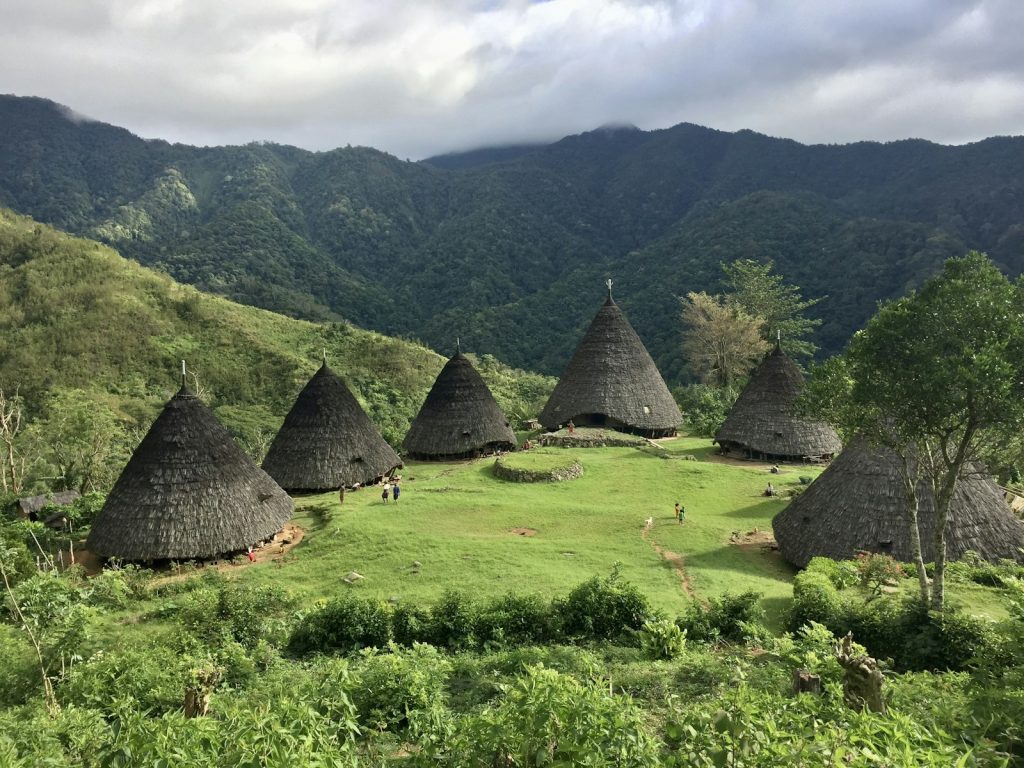
Wae Rebo Village is a remote Manggarai highland village in Flores, famous for its cone-shaped mbaru niang houses and a rewarding jungle trek to reach it. A visit to wae rebo village is not a quick day trip from Labuan Bajo; it’s a multi-day overland journey plus a demanding hike best suited to reasonably fit travellers.
What Is Wae Rebo Village, Exactly?
Wae Rebo is a traditional Manggarai village sitting in a small bowl of cloud forest in the mountains of West Flores. It’s known across Indonesia for its seven iconic cone houses, called mbaru niang, and for the community’s effort to maintain a traditional way of life while carefully opening the village to guests.
A few key points up front:
– Location: inland Flores, in the Manggarai highlands, far from the coast
– Altitude: roughly 1,100–1,200 m above sea level (cooler and often misty)
– Access: 4–6 hours overland from Labuan Bajo + 1.5–3 hour uphill trek
– Recognition: UNESCO Asia-Pacific Award for Cultural Heritage Conservation (for the mbaru niang restoration)
– Stay: simple homestay-style overnight in the village meeting house or one of the guest mbaru niang
You will not find cafés, bars or “Instagram cafés” here. You will find gongs, weaving, shared rice meals on the floor, and early nights.
Why Wae Rebo Is Special
Mbaru Niang – The Cone Houses
The defining feature of Wae Rebo is the cluster of tall, thatched, conical houses. These mbaru niang are:
– Multi-storey, with one main shared living floor and storage or sleeping areas above
– Framed in timber and bamboo, with thick lontar or palm-thatch roofing
– Organised around a central open space that doubles as a village courtyard and ceremonial ground
You sleep on thin mattresses on the woven floor, often side by side with other visitors and sometimes villagers. At night, voices drop, the house creaks in the cool mountain air, and fires die down slowly. Earplugs help; the ambience does the rest.
Living Community, Not an Open-Air Museum
This is not a staged “cultural performance village”. People actually live here, with all the ordinary messiness that implies: kids racing around, roosters calling at odd hours, satellite dishes, plastic buckets, smartphones charging near the generator.
Guests help supplement village income through:
– Overnight contributions
– Optional donations to the traditional council
– Buying coffee, woven textiles, or small handicrafts
The rhythm is village-first, tourism-second. Plans can shift around funerals, ceremonies, or heavy rain. Be ready to follow, not to lead.
Cloud-Forest Setting
On a clear morning the encircling peaks are sharp and green. By mid-morning, clouds often sink down into the bowl, muting sound and colour. Even in dry season, Wae Rebo often feels damp and cool; in wet season it can feel like a cloud swallowed the village.
That isolation is a large part of the appeal. Reaching Wae Rebo means accepting slow travel and dirt, mud, and sweat on the way.
Where Wae Rebo Is and How to Reach It
Basic Geography
Wae Rebo sits inland in Manggarai Regency, in western Flores. From the Labuan Bajo coast you cross the spine of Flores eastwards before dropping into valleys and smaller roads that snake toward the trailhead.
You cannot go by boat; the final transport is all land plus trekking.
Step-by-Step: Labuan Bajo to Wae Rebo
The standard flow:
1. **Labuan Bajo → Ruteng or Dintor/DAngel**
– 4–6 hours by private car depending on traffic, roadworks, and stops
– The Trans-Flores road is paved but windy, with frequent curves and some rough patches
2. **Car to the Trek Start (Denge/Dintor area)**
– From Ruteng: 2–3 more hours on narrower village roads to the trek start near Denge
– Exact driving time varies by road conditions and your overnight base
3. **Trek Start → Wae Rebo**
– Elevation gain: roughly 600–700 m
– Duration: 1.5–3 hours up for most visitors, 1–2 hours down
– Trail: mostly clear, steep in sections, can be slippery in wet weather
There is no cable car, no easy shortcut, and no motorbikes allowed all the way up to the village. The walk is part of the experience.
Is Wae Rebo a Day Trip from Labuan Bajo?
For almost all travellers: no. Reaching, visiting and returning in a single day from Labuan Bajo would be an exhausting, rushed, and for many drivers unsafe endeavour.
Realistic options:
– **2 days / 1 night from Labuan Bajo** – possible, but tight
– **3 days / 2 nights** – more humane, with time to combine Ruteng/Cancar or other stops
If your time is short, it’s better to do Wae Rebo properly over 2–3 days than to attempt something heroic and not actually experience the village.
How the Wae Rebo Trek Works
Distance, Difficulty and Trail Conditions
The Wae Rebo trek is short in distance but sharp in gradient:
– Estimated distance (one way): roughly 3–4 km
– Elevation gain: ~600–700 m
– Typical pace: 1.5–3 hours uphill, depending on fitness, heat, and mud
– Difficulty: moderate to challenging for those not used to hiking
Key factors:
– **Heat & humidity:** even though the village is cool, the lower part of the trial can feel hot and sticky
– **Mud:** after rain, sections turn slick. Expect to get dirty.
– **Steps & roots:** you’ll step over roots, stones, and some eroded sections; trekking poles help knees and balance.
Children with trekking experience and fit older travellers often manage fine, but people with serious knee or heart issues should think carefully and consult a doctor first.
Guides and Local Escorts
You hike with a local guide from the trailhead area, often someone from a nearby village or with family ties to Wae Rebo. Their role:
– Keep you on the main route
– Set a safe pace
– Manage timing to arrive before dark
– Coordinate with the village on arrival
Most arrangements are handled through your tour organiser or driver before you start. Independent travellers can usually find a guide at the trailhead village, but levels of English vary.
Best Time of Day to Trek
– **Start uphill in the morning** – for lower temperatures and less cloud
– **Avoid starting late afternoon** – arriving in the dark complicates the welcome ceremony and increases fall risk
– **Allow margin for weather** – in rainy months, showers often hit mid- to late-afternoon
A common pattern: drive early from Ruteng or Denge area, start trekking by late morning, arrive at Wae Rebo early afternoon.
Trip Structures: 2D1N vs 3D2N
Below is a simplified comparison of the two most common trip formats starting/ending in Labuan Bajo.
| Aspect | 2D1N Wae Rebo | 3D2N Wae Rebo |
|---|---|---|
| Minimum nights | 1 night (in Wae Rebo) | 2 nights (Ruteng/area + Wae Rebo or 2nd stop) |
| Driving hours per day | Long, especially Day 1 | Shorter, spread over more days |
| Time in Wae Rebo village | ~18–20 hours | Up to 1.5–2 days |
| Side trips (Cancar/Ruteng) | 1–2 quick stops | More relaxed, more stops possible |
| Physical intensity | High: long drive + trek same day | Moderate: more recovery time |
| Who it suits | Time-poor but fairly fit travellers | Travellers with 1 extra day to spare |
Sample 2D1N Itinerary: Labuan Bajo–Wae Rebo–Labuan Bajo
Day 1
– Early departure from Labuan Bajo by private vehicle
– Optional short stop at Cancar spiderweb rice fields (if weather and timing allow)
– Continue to trek start near Denge area
– Lunch at local warung / homestay en route
– Trek up to Wae Rebo (afternoon arrival)
– Welcome ceremony in the main mbaru niang
– Dinner and overnight in the communal house
Day 2
– Early morning: village walk, coffee, optional short hill viewpoint
– Late morning: trek down to trailhead
– Lunch en route
– Long drive back to Labuan Bajo, optionally stopping in Ruteng area views or churches if time permits
This is workable, but it is a lot in two days, with early starts and late returns.
Sample 3D2N Itinerary With Ruteng & Cancar
Day 1 – Labuan Bajo → Ruteng
– Morning departure from Labuan Bajo
– Stop at Cancar spiderweb rice fields
– Visit Ruteng town (church, market or just coffee)
– Overnight in Ruteng or nearby guesthouse
Day 2 – Ruteng → Wae Rebo
– Drive from Ruteng towards Denge / trek start
– Lunch near the trailhead
– Trek up to Wae Rebo
– Welcome ceremony, afternoon free in the village
– Overnight in mbaru niang
Day 3 – Wae Rebo → Labuan Bajo
– Morning in the village, then trek down
– Lunch at lower village / along the road
– Return drive to Labuan Bajo with a couple of photo stops
This pacing suits most visitors better: more flexible, more chances for clear-weather views, and less pressure if rain or delays happen.
If you want help comparing routes and timings for your specific dates, you can use our free WhatsApp planning via plan your trip.
What It’s Like to Stay in Wae Rebo
Arrival and Welcome Ceremony
Every visitor is received formally by village representatives. Normally:
1. You gather in the main ceremonial mbaru niang.
2. A simple ritual is performed, often with prayers in Manggarai language.
3. Your presence is “announced” to the ancestors; your safe stay is requested.
Photography is usually paused during this ritual until the elders finish. You sit quietly and follow your guide’s cues.
Sleeping Arrangements
Expect:
– Thin mattresses on the floor in shared sleeping areas
– Blankets or quilts provided; nights can be cold
– Simple shared space; limited privacy
There are no private rooms or “deluxe” options in the way city hotels use those words. Earplugs, eye mask, and a light scarf or beanie help many travellers sleep.
Toilets and Washing
Facilities are basic but functional:
– Squat toilets, flushed with bucket water
– Simple wash areas for bucket showers
– Water is cool to cold; there is no hot running water
Bring:
– Quick-dry towel
– Biodegradable soap if you use any
– Headlamp or torch for night walks to the bathroom
Electricity and Connectivity
– Power: usually from a generator or small solar setup for limited evening hours
– Charging: you may be able to charge a phone or camera, but do not rely on it
– Signal: don’t count on mobile data; treat any connectivity as a bonus
Wae Rebo is one of the few places left on many itineraries where being offline is almost guaranteed. Let people at home know this in advance.
Food and Drinking Water
Meals are simple, home-style Manggarai cooking using what is available and seasonal. Common elements:
– Rice
– Vegetables (leafy greens, beans, pumpkin)
– Tempeh or tofu
– Sometimes chicken or egg
– Local coffee and tea
If you are vegetarian or have allergies, inform your organiser well in advance and remind your guide diplomatically on arrival. Expect adaptations within limits of what the village can source, not elaborate special menus.
Drinking water:
– Boiled water and/or refillable gallons are usually available for refilling bottles
– It’s wise to carry a personal water bottle and, if you have one, a small filter or purification tablets for peace of mind
Culture, Etiquette and Respect in Wae Rebo
Dress and Behaviour
Wae Rebo is Christian-Manggarai with deep ancestral traditions. Conservative but used to visitors.
Simple guidelines:
– Dress modestly: shoulders and knees covered; avoid very tight, transparent or low-cut clothing
– Remove hats in the main house and during ceremonies
– Speak softly in communal spaces, especially at night and early morning
Alcohol is not a feature of village life. Do not bring visible bottles, drink publicly, or treat the village as a “party stop”.
Photography Etiquette
Wae Rebo is widely photographed, but consent still matters.
– During the welcome ceremony, keep cameras in your bag unless elders explicitly say otherwise.
– Ask before photographing individuals, especially elders and children. A smile and raised camera is often enough, but waiting for a nod is best.
– Drones: ask in advance through your organiser; many communities are increasingly wary of drones buzzing overhead. If allowed at all, fly with extreme discretion and keep distance.
If someone says “no” to a photo, accept it calmly.
Gifts, Donations and Money
There are a few different money flows to consider:
1. **Visitor contribution / overnight fee** – usually arranged via your organiser or paid at registration. Amounts and structure are managed by the community and can change.
2. **Ceremonial / adat donation** – sometimes your guide will suggest a small contribution to support traditional activities; often given collectively on behalf of your group.
3. **Tips** – optional for village staff helping with hosting and cooking; best given into the common box or via your guide so distribution is fair.
4. **Purchases** – coffee, woven textiles, small handicrafts. This is one of the most direct ways to support families.
Because the community periodically updates contributions and allocations, treat any numbers given in guides or blogs as snapshots, not fixed rules. As a rough orientation (last verified June 2026 via local contacts), per-person overnight contributions and logistics often end up in the moderate range for Flores village stays, but exact figures vary by organiser and group size.
If you want to bring gifts, useful ideas:
– School supplies (pens, notebooks, colouring pencils)
– Simple, sturdy toys (balls, skipping ropes)
Avoid:
– Sweets, which contribute to dental issues
– Random trinkets or single-use plastics
It is more sustainable to support local weaving and coffee by buying what you genuinely like.
What to Pack for the Wae Rebo Trek
Daypack Essentials
You do not need a huge backpack. Aim to carry a compact daypack for the overnight and leave non-essential luggage in your car or Ruteng accommodation.
Useful items:
– Light rain jacket or poncho
– Warm layer (fleece or light sweater) – nights can be cold
– Quick-dry t-shirt and long trousers
– Spare socks
– Small first-aid kit: plasters, blister plasters, pain relief, any personal meds
– Headlamp or flashlight (with spare batteries)
– Refillable water bottle (at least 1–1.5 L capacity)
– Snacks for the trek: nuts, energy bars, dried fruit
– Thin sleeping liner or sarong if you prefer your own layer on the mattress
– Earplugs and eye mask
– Hand sanitiser and tissues
Footwear
The trail can be muddy and slick. You’ll be happier if you bring:
– Trail runners or light hiking shoes with grip
– Or sturdy sandals with heel straps for those confident in them on steep terrain
Flip-flops are fine for inside the house and bathroom runs, not for the trek.
For Rainy Season
If you’re going in the wetter months (roughly November to March in much of Flores, though patterns vary year to year):
– Pack a better-quality rain jacket
– Waterproof dry-bag or liner for electronics and clothes
– Lightweight trekking poles if you’re prone to slipping
It is still manageable, but you need to accept mud as part of the experience.
When to Visit Wae Rebo: Seasons and Weather
Flores typically has a drier and a wetter half of the year, though climate patterns can shift.
– **Drier season:** roughly April–October
– Trails usually in better condition
– Cooler, clearer mornings more common
– Higher overall visitor numbers in school holiday periods
– **Wetter season:** roughly November–March
– Trail can be more slippery
– Cloud and rain more frequent; views more hit-or-miss
– Fewer visitors; village feels quieter
You can visit Wae Rebo year-round. Just calibrate your expectations: dry season doesn’t guarantee blue skies every day; wet season doesn’t mean endless storms. Weather in the mountains is changeable, and we do not guarantee specific conditions on any given date.
Combining Wae Rebo with Cancar, Ruteng and Beyond
Cancar Spiderweb Rice Fields
Cancar, between Labuan Bajo and Ruteng, is known for its circular, spiderweb-like rice-field layout (lingko). Traditional land-sharing patterns created these radiating segments; from a hilltop viewpoint you see the full design.
Most Wae Rebo trips from Labuan Bajo naturally pass near Cancar. On a clear day:
– Short walk up to the viewpoint
– Photo stop and quick explanation from your driver or guide
In rainy or foggy conditions, expect less dramatic views but still an interesting stop.
Ruteng: Mountain Town Stopover
Ruteng is a cool highland town often used as a night stop on Wae Rebo itineraries. It offers:
– Cooler temperatures and less humidity
– Basic but decent guesthouses and small hotels
– Access to local markets, churches and coffee shops
Staying here breaks the long drive from Labuan Bajo and gives you a gentler transition into inland Flores life.
Other Overland Extensions
If you have more time, you can embed Wae Rebo into a longer Flores overland route, for example:
– Labuan Bajo → Ruteng → Wae Rebo → Bajawa → Ende/Maumere
– Or the reverse, if you’re arriving from east Flores and finishing in Labuan Bajo
Overland logistics, car/driver fees, and accommodation quickly become complex on multi-stop itineraries. If you’d like help mapping a realistic route (and understanding current road and fuel conditions), use the WhatsApp link on plan your trip and we can talk through it.
Costs and How Trips Are Structured Financially
Main Cost Components
A Wae Rebo visit generally involves several layers of cost:
– **Transport:** private car/driver from Labuan Bajo and back, and/or across Flores
– **Guide services:** local guide for the trek; sometimes a Flores-wide guide if you’re on a longer route
– **Village contributions:** overnight fees, community charges
– **Food:** meals on the road and in the village (often bundled)
– **Accommodation outside Wae Rebo:** Ruteng/Denge guesthouses as needed
Because some of these costs are community-set and others are market-based (fuel, vehicle hire), total budgets vary widely depending on group size, comfort level, and season.
Price Ranges (Last Verified June 2026)
Based on recent check-ins with local operators and drivers (not tied to any one company), you can roughly expect:
– Per-day car + driver from Labuan Bajo for Flores overland: in the moderate double- to low triple-digit USD-equivalent range, depending on vehicle size and exact itinerary
– Overnight Wae Rebo contributions + village hosting (per person): commonly fall within the typical range for community-based tourism sites in Flores, on top of your overland costs
Exact numbers are deliberately not fixed here because they shift with fuel prices, village decisions, and exchange rates. Any serious plan should be costed against current conditions, not last year’s blog post.
If you use a recommended local partner through Labuan Bajo Tours, they may pay us a referral fee at no extra cost to you. No one can pay to change what we publish.
Is Wae Rebo Right for You?
You’ll probably appreciate Wae Rebo if:
– You’re okay with getting sweaty, muddy and tired for a cultural reward
– You are curious about village life beyond “performances”
– You can handle simple sleeping conditions and basic bathrooms
– You’re fit enough for a sustained uphill walk of a couple of hours
It might be the wrong choice if:
– You need hotel-level comfort, private rooms and hot showers
– You have serious mobility issues or balance problems
– You want a quick “tick-box” photo stop without investing time and effort
– You are very sensitive to cold, damp and shared spaces
If you’re on the fence, we can talk through your fitness, timing, and expectations via WhatsApp and see if it fits into your broader Flores plans: start at plan your trip.
Responsible Travel Tips for Wae Rebo
Minimise Plastic
– Bring a refillable water bottle instead of buying many small plastic bottles
– Refuse single-use straws or bags where possible
– Pack out any non-biodegradable trash that cannot be disposed of locally
Support Local, Meaningfully
– Buy textiles only if you genuinely appreciate them, not just for a quick haggle
– Drink village coffee and ask (through your guide) about the process if you’re interested
– Be on time for meals and ceremonies; respect the hosts’ schedule
Share Carefully Online
If you post on social media:
– Avoid geotagging every detail in a way that encourages mass drop-in tourism without context
– Share cultural explanations, not just “exotic” images
– Avoid photos of children’s faces without consent from their guardians
This helps keep Wae Rebo a place for thoughtful travellers, not a backdrop for quick-content trends.
Frequently Asked Questions About Wae Rebo Village
How hard is the Wae Rebo trek for someone with average fitness?
For most people with average fitness, the Wae Rebo trek feels like a solid workout but not an expedition. Expect 1.5–3 hours of mostly uphill walking with a steady incline, some steeper sections, and possibly muddy ground. If you already do occasional hikes or long walks, it’s very manageable; if you’re mostly sedentary, it will feel demanding but still doable with enough time and rest stops.
Can I visit Wae Rebo village without staying overnight?
Technically it’s possible to hike up, visit briefly and hike down the same day from the trailhead, but coming all the way from Labuan Bajo and back in one day is not advisable. You’d spend almost all your time in cars and on the trail, with minimal village experience. The overnight stay is a core part of the visit and gives the community more direct benefit from your trip.
Do I need to book Wae Rebo in advance?
Advance planning is strongly recommended, especially in drier months and for groups. While the village can host multiple visitors in the communal mbaru niang, coordinating guides, transport, and contributions works much better if arranged ahead. Turning up at the trailhead without prior coordination can lead to confusion, delays, or mismatched expectations.
Is Wae Rebo suitable for children?
It can be, for children who are used to walking and don’t mind basic conditions. Younger kids may need to be carried for parts of the trail, and parents must be comfortable with shared sleeping spaces and simple bathrooms. There are no playgrounds or screens; entertainment is mostly trees, hills, and village life.
What language is spoken in Wae Rebo, and will people understand English?
Locals mainly speak Manggarai language and Indonesian. Some younger villagers and most trekking guides have basic to moderate English for hosting visitors. Don’t expect deep philosophical conversations in English, but you can communicate essential needs and enjoy simple exchanges, especially with your guide helping to translate.