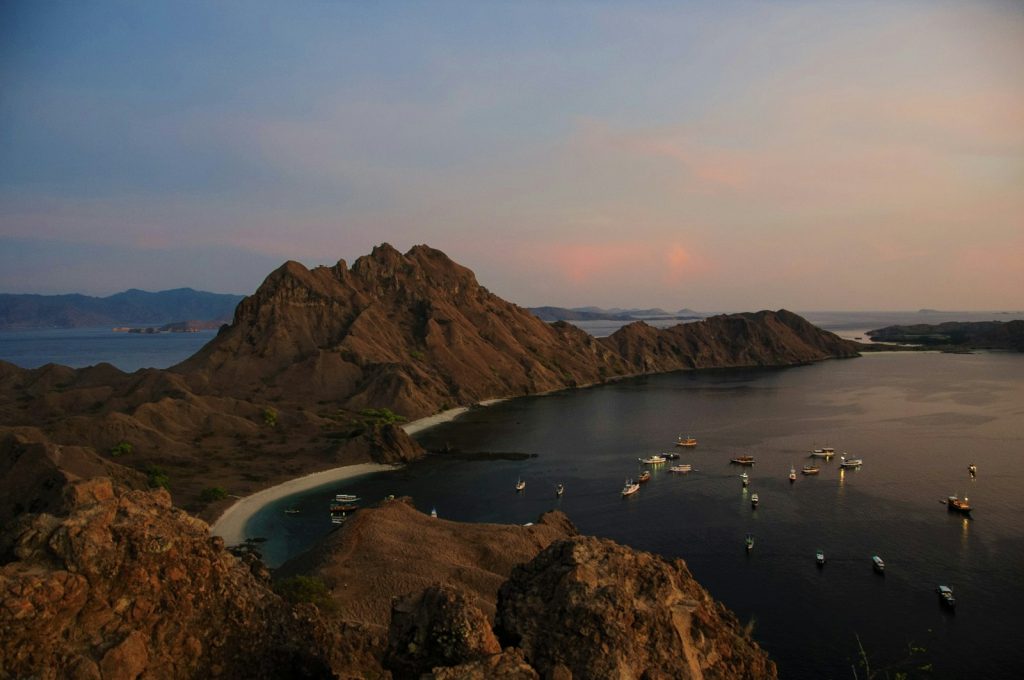
Labuan Bajo travel guide means one thing: clear, honest instructions for using this small port town as your base to explore Komodo National Park and western Flores. This page is that guide, written from Labuan Bajo, for your 2026 trip.
I’m Fransiskus Dagur, Manggarai-born, fifteen years guiding on these waters before starting Labuan Bajo Tours as an independent travel-intelligence project. No one can pay to change what we publish; if you proceed with our partner they may pay us a referral fee at no extra cost to you.
Use this Labuan Bajo guide as your master reference and jump off to more detailed pieces when you need them.
—
## Labuan Bajo at a glance
Labuan Bajo is a small town on the western tip of Flores Island, East Nusa Tenggara, Indonesia. It is the practical gateway to Komodo National Park and a hub for trips across Flores.
Think of Labuan Bajo as:
– **Harbour + airport + hill town**
– **Komodo departure point** (dragons, reefs, islands)
– **Base camp** for Flores overland trips (Wae Rebo, Kelimutu, Bajawa, Ruteng)
A few quick anchors for your mental map (last verified June 2026):
- Country / region
- Indonesia, East Nusa Tenggara (NTT)
- Population
- Small town; core area walkable end to end in ~25–30 minutes
- Airport code
- LBJ – Komodo International Airport
- Distance airport–harbour
- Approx. 2–3 km (10–15 minutes by car)
- Main street
- Jalan Soekarno Hatta (upper and lower sections)
- Primary reason to visit
- Boat trips into Komodo National Park; diving, snorkelling, dragons, island scenery
- Secondary reason
- Overland Flores culture and landscapes
Labuan Bajo itself is not a resort bubble. It’s a working harbour town that has grown fast. You’ll see fishing boats, construction dust, luxury hotels, warungs, and kids walking home from school all at once.
—
## How to get to Labuan Bajo
### Flying to Labuan Bajo (LBJ)
By far the easiest way to visit Labuan Bajo is to fly.
Domestic routes change seasonally, but as of June 2026 the typical pattern is:
– **From Bali (DPS – Denpasar)**
– Nonstop flights most days
– Flight time: ~1 hour
– **From Jakarta (CGK)**
– Nonstop and 1-stop options depending on season
– Flight time: ~2–2.5 hours direct
– **From Surabaya (SUB) & other Indonesian cities**
– Often via Bali or Kupang
International visitors usually connect through **Bali** or **Jakarta**.
Tips:
– Earlier flights have fewer weather delays than late-afternoon ones, especially in rainy months.
– Leave buffer time if you have same-day connections onward; domestic delays are common across Indonesia.
### By ferry or overland
You can reach Labuan Bajo by a chain of ferries and buses across the Indonesian archipelago. It’s more of an adventure than a time-saver.
Common overland paths:
– **From Lombok/Sumbawa:**
– Bus + ferry combinations west–east through Lombok → Sumbawa → Flores
– Multi-day, usually 2–3 days door-to-door to Labuan Bajo
– **From overland Flores:**
– Buses or private cars from Ende, Maumere, Bajawa, Ruteng into Labuan Bajo
– Road conditions vary; rain can slow everything
Overland ferries are cheap but schedules can slip, and comfort is basic. For most short holidays, flying is the rational option; overland is for slow travelers with flexible timing.
—
## Orientation: understanding the town layout
Labuan Bajo is simple once you break it into zones:
### 1. Harbourfront / lower main street
– Fishing harbour, jetty for public boats, and private trip departures
– Lower **Jalan Soekarno Hatta** runs along the water
– Dense strip of: small hotels/hostels, dive shops, tour desks, cafés, ATMs, mini-marts
From many budget and midrange hotels here you can **walk to the harbour in 5–15 minutes**.
### 2. Upper town & residential hills
– Upper **Jalan Soekarno Hatta** curves above the harbour
– Residential streets climbing the hills in all directions
– Sunset viewpoints, some boutique hotels and restaurants with elevated views
Hills are steep. A 700 m walk on the map can feel longer in the midday heat.
### 3. Airport corridor
– **Komodo International Airport (LBJ)** a short drive east of town
– Newer hotels, some bigger resorts spreading along this road and out to coastal pockets
– Not walkable to town in tropical heat for most people; expect taxis or ojeks
### 4. Outskirts & villages
– Manggarai villages, small homestays, and local eateries beyond the main drag
– Quiet, but longer transfers to harbour for early boat departures
—
## When to visit Labuan Bajo and Komodo
There is no single “best” month, only trade-offs. Seasons below are based on local patterns (last verified June 2026). Climate can still surprise you.
### Dry season (approx. April – October)
– **Weather:** Usually sunnier, humidity a bit lower, seas generally calmer
– **Visibility underwater:** Often very good for snorkelling and diving
– **Crowds:** High season June–September, especially July–August
– **Costs:** Some accommodation and boats quote higher rates in these months
This is the classic time to visit Labuan Bajo if your priority is stable boat conditions and clear skies.
### Shoulder months (March & November)
– **Weather:** Transition; you can get a mix of sunny runs and serious showers
– **Sea conditions:** Often workable, with occasional rough days
– **Crowds:** Lighter than peak dry months
– **Perk:** Good compromise between conditions and crowd levels
### Wet season (approx. December – February)
– **Weather:** Frequent rain, sometimes hard and extended; humidity high
– **Sea conditions:** Can be rough; some days unsafe for small boats
– **Closures:**
– Some smaller operators pause multi-day liveaboards
– Certain hikes may be muddy and less comfortable
– **Upside:** Fewer boats at the classic Komodo sites; greener landscapes
The national park does **not** close fully in wet season. Trips still run whenever conditions allow, but expect more last-minute changes.
—
## Park and other fees (Komodo National Park)
Fees in Komodo have been a moving target over the years. Always confirm latest rates shortly before you go; the ranges below are for orientation only (last verified June 2026).
You can expect **separate charges** for:
– **Park entry** (per person; Indonesian vs international rates often differ)
– **Conservation / tourism levy**
– **Ranger or trekking fees** on Komodo/Rinca/Padar for walks
– **Snorkelling/diving fees** per person per day in the marine area
– **Boat anchoring or mooring fees** (usually wrapped into your tour price)
Common patterns:
– Day trips usually **bundle fees** into the advertised rate or list them clearly as extra, depending on the operator.
– Multi-day liveaboards sometimes list park fees separately because they change often.
– Children may pay reduced fees, but age cut-offs vary; ask ahead.
Key point: clarify **“all-in cost including current park fees?”** whenever you compare offers.
—
## Where to stay in Labuan Bajo
You can visit Labuan Bajo on almost any budget. What you get for each step up is: more space, better sleep, stronger AC, quieter nights, and smoother logistics.
### Main accommodation types
– **Budget guesthouses & hostels**
– Simple rooms, fans or basic AC
– Often near the harbour or up the hill
– Good for backpackers and short-stop stays
– **Midrange hotels & boutique stays**
– Pooled properties, better soundproofing, more reliable hot water
– Some with harbour views, sunset decks, or free harbour shuttles
– **High-end resorts & villas**
– On hills or along quieter coastlines outside town
– Strong AC, larger rooms, structured services (airport pick-up, private jetties, etc.)
– Great if you want a softer landing before/after rough boat days
Labuan Bajo isn’t huge, but location affects your daily experience:
– **Near the harbour:**
– Easy early-morning departures
– Can be noisy: scooters, music, construction
– **Up the hill:**
– Views, breezier evenings
– Steep walks; use ojeks/taxis for harbour runs
– **Out of town or on separate coves/islands:**
– Quiet and resort-like
– Check how early boats or shuttles can get you to your Komodo departure
We keep a living breakdown by neighbourhood and price tier in our accommodation pillar. When you’re ready to match lodging to your itinerary, you can plan your trip with us via WhatsApp and we’ll help sense-check options without pushing specific hotels.
—
## Getting around town
Labuan Bajo is compact but hilly. You’ll mix walking with short rides.
### Walking
– Harbourfront and lower main street are walkable for most people
– Heat and humidity make **midday climbs** tiring; carry water
– Footpaths can be uneven; watch for scooters using narrow side roads
### Local transport
Common options:
– **Ojek (motorbike taxi):**
– Fast for solo travelers, especially up/down hills
– Agree on price before you hop on
– **Car taxis / private cars:**
– Airport transfers, hotel–harbour drops, dinners out of town
– Some hotels have their own cars; others call local drivers
– **Rental motorbikes:**
– Widely offered in town
– Only consider if you are comfortable with Indonesian traffic, mixed road quality, and tropical rain
Ride-hailing apps exist in parts of Indonesia; local regulations and availability in Labuan Bajo shift. Don’t rely solely on apps—have a hotel contact or driver number saved.
—
## The tour menu: how people actually explore Komodo
This is the heart of any Komodo travel guide: how you get onto the water, what a typical day looks like, and your options by time and budget.
There are three main patterns:
1. **Shared day trips by speedboat or wooden boat**
2. **Private day trips**
3. **Multi-day liveaboard trips** (sleeping on a boat)
You also have **land-based tours** on Flores (Wae Rebo, spider-web rice fields, waterfalls), which we’ll cover after the water-based menu.
### Shared day trips (most common for first-time visitors)
You join a group on a scheduled itinerary, departing early morning and returning late afternoon or after sunset.
Typical elements:
– Hotel pick-up in town → harbour
– Boat ride to one or more Komodo National Park islands
– Guided Komodo dragon walk (usually on Komodo or Rinca)
– One or more snorkelling stops (manta sites, reef sites)
– Island viewpoints like Padar
– Simple onboard meals, drinking water, snorkel gear
**Speedboats** cover more distance in a day; **traditional wooden boats** move slower but can feel more relaxed.
Day trip comparisons (generalizations, not operator-specific):
| Type | Pros | Cons | Best for |
|---|---|---|---|
| Shared speedboat day trip | Maximizes number of stops; shorter travel time; fits tight schedules | Can feel rushed; more engine noise; less shade space per person | Short stays, “do it in one day” visitors |
| Shared wooden day trip | Slower pace; more time drifting and resting; typically more shade | Fewer far-flung sites in one day; longer return in choppy seas | Those prioritizing relaxed pace over checklist |
### Private day trips
You charter a boat for your group.
Why people choose private:
– Set your **departure time** more flexibly (within safety limits)
– Adjust **itinerary** with captain/guide on the day depending on weather, current, and crowd patterns
– More room to spread out, useful for **families with kids** or older travelers
– Easier to align with specific interests (more time snorkelling, or more time on the dragon walk, etc.)
You still need to respect park rules (no random landings, mandatory rangers for certain hikes, etc.), but you have more control over pace and feel.
### Multi-day liveaboard trips
You sleep on the boat, usually 2–4 days; some specialist trips run longer.
Patterns:
– **Classic “Komodo highlights” 2D1N or 3D2N:**
– Mix of dragon walks, manta spots, coral reefs, and island viewpoints
– Sunset or sunrise experiences that day-trippers miss
– **Diving-focused liveaboards:**
– Several dives per day
– Itineraries tuned to tides and dive sites, less land time
– **Chartered family or group liveaboards:**
– Adapted schedules, gentler site selection for mixed ages
Liveaboards let you **spread out the classic sites** and add quieter corners of the park, at the cost of more days and higher total spend.
—
## Land-based Flores tours from Labuan Bajo
A good Labuan Bajo travel guide doesn’t stop at the harbour. West Flores beyond town is rich in culture, coffee, and cooler highlands.
Common land excursions:
### Day trips and short overnights
– **Cunca Wulang / Cunca Rami waterfalls:**
– Jungle walks and river swims when water levels permit
– **Rangko Cave:**
– Tidal cave with a saltwater pool; trips are tide-dependent
– **Spider-web rice fields near Ruteng (Lingko):**
– Usually part of a longer Flores circuit, but some attempt a very long day trip
### Multi-day Flores overland trips
Classic structure:
– 3–7 days one-way Labuan Bajo → Ende/Maumere (or reverse)
– Stops may include: Ruteng, Bajawa, Moni (Kelimutu), traditional villages, coffee and clove highlands, hot springs
You can:
– **Join a small group overland trip** starting or ending in Labuan Bajo
– **Hire a private car + driver-guide** and customize stops and pacing
– **Combine** Komodo liveaboard with Flores overland in one longer itinerary
Plan Flores legs with even more buffer than boat days; mountain weather and road delays are real.
—
## Sample itineraries (realistic 2026 pacing)
Use these as templates, then adjust for your flight timings and interests.
### 3 days / 2 nights – Short Komodo focus
**Good for:** People adding Komodo onto a Bali or Jakarta trip.
**Day 1 – Arrival and town**
– Arrive at LBJ
– Check into hotel, walk the harbour and main street
– Sunset drink on a hill or harbourfront
– Early night
**Day 2 – Shared speedboat Komodo day trip**
– Early breakfast, transfer to harbour
– Full-day shared speedboat itinerary: dragons, snorkel, viewpoint (varies by operator)
– Return around late afternoon to early evening
– Simple dinner in town
**Day 3 – Buffer morning + departure**
– Slow morning for souvenir shopping or a short town walk
– Head to airport; leave room for delays on boat return and check-out
### 5 days / 4 nights – Komodo + one land highlight
**Good for:** First-time visitors who want more than a single rushed day on the water.
**Day 1 – Arrival**
– Land mid-day or afternoon
– Check-in, orientation walk
**Day 2 – Komodo day trip (dragons + snorkel)**
– Shared or private day trip
– Evening free
**Day 3 – Land day: waterfall or cave**
– Guided trip to a nearby waterfall or cave (conditions and tides permitting)
– Return late afternoon
– Optional sunset spot above town
**Day 4 – Relaxed second boat day**
– Choose a second day trip with focus:
– Reefs and mantas, or
– Longer time on one or two quieter spots
– Evening packing
**Day 5 – Departure**
– Airport transfer
– Keep some buffer for traffic and check-in queues
### 7–10 days – Komodo + Flores overland
**Good for:** Travelers who want the full west Flores picture.
One possible flow:
– **Day 1:** Arrive Labuan Bajo, acclimatize
– **Days 2–4:** 2–3 day liveaboard or two intensive day trips into Komodo
– **Day 5:** Start overland: Labuan Bajo → Ruteng (highlands, rice fields)
– **Day 6:** Ruteng → Bajawa (traditional villages, hot springs, volcano backdrops)
– **Day 7:** Bajawa → Moni
– **Day 8:** Sunrise at Kelimutu, then on to Ende or Maumere for onward flights
This is just one structure; you can slow it down or stop earlier. For help aligning boats, drivers, and flights into a cohesive route, you can plan your trip with us via WhatsApp and we’ll map realistic options.
—
## What things cost (budget ranges for 2026)
All figures below are **broad ranges** to help you sketch a realistic budget (last verified June 2026). Exact prices depend on season, boat standard, room category, and availability.
### Daily spending anchors (per person, excluding flights)
These are typical **on-the-ground** budget bands:
– **Shoestring:**
– Shared hostel/guesthouse rooms, warung meals, shared day trip
– Very tight choices, limited extras
– **Comfortable midrange:**
– Private AC room, mix of local and café meals, a couple of organized excursions
– **Higher-end:**
– Better hotels/resorts, private or small-group tours, more restaurant meals
Expect to spend **more per day on days you go on the water**. Park fees + boat costs add up even on budget trips.
### Cost drivers that surprise people
– **Park fees**: Often a **large chunk** of your day-trip price
– **Single travelers**: Pay close to the same for private boats and cars as couples; shared trips help
– **Peak season**: Accommodation and some tours shift rates higher around July–August and some holidays
– **Gear**:
– Basic snorkel gear often included, but quality varies
– Specialty gear (dive computers, underwater cameras, etc.) cost extra to rent
Design your budget around what you **want to experience**, not just nights stayed. Two carefully chosen days on the water will shape your memory of the trip more than the number of evenings in town.
—
## What to pack for Labuan Bajo & Komodo
Keep it light, but protect yourself from sun, wind, and salt.
### Essentials
– **Passport + printed or digital copies**
– **Bank cards + some Indonesian rupiah** (ATMs exist; outages happen)
– **Light, breathable clothing**
– **Long-sleeved sun shirt / rash guard** for boats and snorkelling
– **Hat with strong chin strap** (boats get windy)
– **Reef-safe sunscreen** (cream/liquid, not spray; use well before entering water)
– **Sturdy sandals or lightweight trainers** for island walks
– **Dry bag** for phones and cameras on boat days
– **Refillable water bottle** (many boats have water; bottle is on you)
### Optional but very useful
– **Compact mask and snorkel** if you care about fit/hygiene
– **Light rain jacket or poncho**, especially November–March
– **Motion sickness tablets** if you are boat-sensitive
– **Power bank** (boats often have limited or no charging)
– **Small headlamp** for liveaboards or power cuts in town
– **Sarong or light towel** for changing and sun cover
Dress expectations are informal. Respectful, simple clothing is fine everywhere; no need for formal wear unless you want photos at high-end venues.
—
## Safety, health, and common scams
Labuan Bajo and Komodo National Park are generally friendly places. Most visits pass without serious issues. Still, a good Komodo travel guide includes the less glossy parts.
### On the water
– **Lifejackets:** Make sure there is one **per person** and that they fit. Wear them whenever instructed; sea conditions can change quickly.
– **Boat condition:** This varies widely. Ask about:
– Radio and communication
– Crew experience
– Max passenger numbers
– **Currents:** Komodo is famous for strong currents. Follow your guide’s instructions strictly when snorkelling or diving. This is non-negotiable.
– **Wildlife:**
– Do not touch manta rays, turtles, or any marine life.
– Do not feed fish.
No operator can **guarantee** manta sightings or perfect visibility. Avoid anyone promising that.
### On the islands (Komodo dragons and hikes)
– **Follow ranger instructions** at all times.
– **Keep distance** from dragons; they can move faster than you expect.
– **No food in open pockets**; it can attract animals.
– **Shoes not flip-flops** for all but the shortest, flattest walks.
### In town
– **Petty theft:**
– Use hotel safes where available
– Don’t leave phones or bags on open café tables by the street
– **Traffic:**
– Scooters dominate; check both ways, then check again
– Few sidewalks; walk defensively, especially at night
### Common friction points and “soft scams”
Most people here are honest. Friction tends to be around **miscommunication and expectations**, not elaborate cons.
Patterns to watch:
– **“Too good to be true” day-trip prices:**
– May hide lower boat standards, crowding, or exclude park fees
– **Vague itineraries:**
– If everything is “maybe” without a clear base plan, expect disappointments
– **Unclear cancellation policies:**
– Weather-related changes are real; understand what happens if the harbour master closes departures
Best protection is **specific written confirmation** (message or email) covering:
– Date, boat type (not just “fast boat”), approximate capacity
– Inclusions/exclusions (park fees, meals, snorkel gear, hotel pick-up)
– Plan B if weather forces route changes
We track patterns we see from readers and our own checks. That feeds into how we recommend structuring your bookings in our more detailed planning guides.
—
## Practical tips for 2026 visitors
– **Connectivity:**
– Mobile 4G in town is usually fine; signal in the park varies from patchy to none
– Don’t rely on being online while on boats
– **Money:**
– ATMs exist in Labuan Bajo but can run out or have network issues
– Many smaller warungs and some local tour desks are **cash only**
– Card acceptance is growing in hotels and dive centres but not universal
– **Language:**
– Bahasa Indonesia and local Manggarai language dominate
– English is workable in most tourist-facing businesses; less so in villages
– **Food:**
– Range from street warungs to upscale restaurants
– Seafood is common; vegetarian options improving but still limited in some spots
– **Alcohol:**
– Beer is widely available in tourist venues
– Spirits and imported wine can be expensive
– **Power:**
– Indonesia uses 220V, two-round-pin plugs (European style)
– Power cuts do still occur; better hotels and boats may have generators
—
## How to use this guide and plan next steps
Think of this page as your **compass**. From here, you’ll probably want to go deeper on:
– Detailed **Komodo boat trip types and route breakdowns**
– **Flores overland circuits** and village etiquette
– **Accommodation by area and budget**
– **Diving vs snorkelling** choices in the park
We maintain those as separate, regularly updated pillars. If you’d like help stitching them into **one coherent route** built around your dates and priorities, you can plan your trip with us. Send your rough dates and wishes by WhatsApp, and we’ll respond with grounded options and honest trade-offs, not a hard sell.
—
## FAQs
How many days do I need in Labuan Bajo for Komodo?
For a first visit, plan at least 3 days / 2 nights: one full day on the water and buffer on either side for flights and weather. Four to five days lets you add a second boat day and a land trip without rushing. If you want both Komodo and a meaningful slice of Flores overland, 7–10 days is a better target.
Is Labuan Bajo safe for solo travelers?
Yes, Labuan Bajo is generally welcoming for solo travelers, including solo women, with the usual urban cautions: guard your valuables, be careful at night on quiet streets, and choose operators with good safety practices. Shared day trips and group dives are an easy way to meet others while spreading costs.
Can I visit Komodo National Park without a tour?
You need a boat and, for dragon walks and certain islands, official rangers or guides. In practice this means booking a tour, chartering a boat with crew, or joining a liveaboard. Independent travelers can arrange boats directly at the harbour, but you still must follow park rules and pay the required fees.
Do I need to book Komodo tours in advance?
In high season or if your dates are fixed, it is wise to book core trips in advance, especially specific liveaboards or private charters. In shoulder and low seasons, you can often arrange shared day trips after arrival, though exact itineraries or boat types may be more limited. Always leave some flexibility for weather-related adjustments.
Is Komodo or Rinca better for seeing dragons?
Both Komodo and Rinca islands have wild Komodo dragons. Sightings can vary day to day and no guide can guarantee them. Rinca often involves slightly shorter, more open walks; Komodo can offer different terrain and viewpoints. Many itineraries choose one based on weather, tides, and crowd patterns rather than inherent superiority.