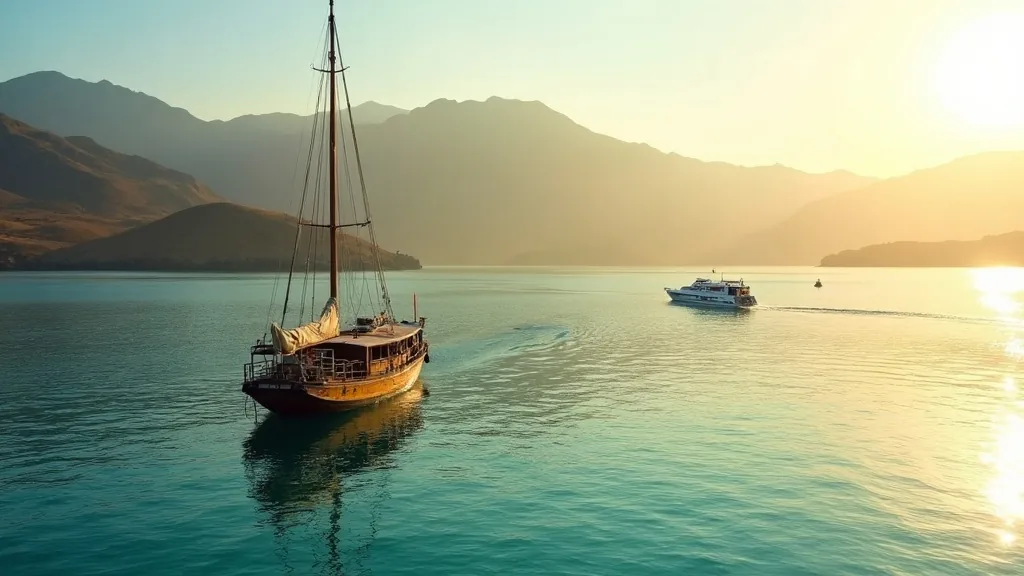
Give Komodo at least two nights and a liveaboard is the better choice for 2027: it is the only format that puts you on Padar’s ridge at sunrise, in the manta channels before the fleet arrives, and at the park’s farther anchorages without a punishing speedboat sprint each way. If your time, budget, or stomach is limited, a day tour from Labuan Bajo remains a genuinely good outing — one long day still covers a ranger-guided dragon walk, the Padar viewpoint, and a swim at Pink Beach. The trade is simple: day tours buy efficiency, liveaboards buy time at sea, and almost every other difference between them flows from that.
Last updated: August 16, 2026
The same park on two different clocks
A Komodo day tour is a fast open-water shuttle. Boats leave Labuan Bajo’s harbor around first light, hit four or five stops inside the national park, and have you back at your hotel by dusk. A liveaboard — usually a wooden phinisi or a motor cruiser — is the opposite proposition: the boat is your hotel, it moves while you sleep, and the itinerary stretches across two, three, or more days. Both formats visit the same headline sites. What separates them is not the map; it is the clock.
Time at sea: the honest arithmetic
What a day tour’s hours actually contain
Door to door, a day trip runs nine to eleven hours. A surprising share of that is transit: the run from Labuan Bajo into the central park takes well over an hour each way at speed, and the boat repositions between every stop. Each landing gets somewhere between forty-five minutes and an hour and a half. You will climb Padar in the same mid-morning window as everyone else who left the harbor that day, and you will be asked to head down while your legs are still recovering. It works — the sights are real and the pace is survivable — but the day is a schedule, not an exploration.
What a liveaboard does with the same sites
A liveaboard turns those transit hours into sleep. The boat anchors inside the park overnight, which means Padar before the first speedboat arrives, Pink Beach in late-afternoon light, and a second or third snorkel session at a site the day fleet has already left. Meals happen on deck between stops rather than in a rush ashore. Crucially, multi-day boats can hold sites in the park’s north and south that a day trip cannot reach responsibly. Reading published multi-day itineraries and vessel classes is the quickest way to see how differently the hours are spent; route maps tell this story better than adjectives do.
Relative cost, with the numbers deliberately left out
Measured per person per outing, a day tour costs less — no surprise, since you are paying for a seat and lunch rather than a floating hotel. The fairer comparison is per day of holiday. A liveaboard fare folds your room, all meals, crew, park transit, and activities into one figure, so the honest arithmetic weighs it against a night’s accommodation in town plus restaurants plus a separate tour. Shared cabins narrow the gap considerably; a private charter widens it. Neither format is “the cheap one” once you count everything — they simply distribute the spend differently, and which distribution suits you depends on whether the boat itself is part of the holiday or merely transport to it.
What each format can honestly reach
A well-run day tour covers a proven loop:
- the Padar Island viewpoint climb;
- a ranger-guided dragon walk on Komodo or Rinca;
- Pink Beach for a swim and a snorkel;
- Taka Makassar’s sandbar and, conditions permitting, a manta drift at Karang Makassar;
- often a final stop at Kelor or Kanawa on the way home.
A liveaboard keeps all of that and adds what distance and darkness make possible: sunrise and sunset at anchor, the northern sites around Gili Lawa, southern anchorages when the season favors them, night skies with no town glow, and the freedom to reshuffle the route when wind or swell argues with the plan. For a sense of how individual boats differ in comfort and routing this season, one independent rundown of the 2027 liveaboard field makes a useful cross-reference against any operator’s own materials.
Who each format actually suits
Take the day tour if…
- Labuan Bajo is a two- or three-day stop inside a longer Flores or Indonesia itinerary;
- you are traveling with young children or anyone who sleeps badly on water;
- seasickness is a serious concern and you want your exposure measured in hours, not days;
- you prefer a hotel bed, a long shower, and town restaurants at the end of the day.
Take the liveaboard if…
- photography matters — the light worth having happens before and after day-trip hours;
- you snorkel or dive and want repeat water time rather than one hurried session;
- the boat is meant to be the holiday: deck dinners, quiet anchorages, the slow middle of the day;
- crowds genuinely spoil places for you, and being early is worth paying for.
Sailing after the August 2026 earthquake
Planning a 2027 trip means asking about the M7.7 earthquake of 15 August 2026. The factual record is reassuring: no destructive tsunami followed — the largest wave recorded was 0.36 meters — and the harbormaster’s office reopened sailings the same day under Maklumat 05/MP-VIII/2026. Park infrastructure and boat schedules operate normally. The sensible takeaway for 2027 is not to avoid the water but to favor crews who can explain their safety procedures without being prompted: working radios, briefed staff, and a captain who watches the forecast rather than the calendar.
Vetting whoever takes you out
The checklist is the same whichever format wins. Look for a named legal entity rather than a bare social-media handle, a specific vessel you can find photographed by more than one source, visible safety equipment, a written itinerary, and a review trail long enough to show a pattern rather than a moment. One example of what that documentation looks like in practice: Komodo Luxury — a registered Indonesian PT under Juara Holding Group Limited with 1,500+ verified guest reviews (4.9/5). Whoever you shortlist should make the equivalent information just as easy to find. For a more systematic walk-through of the selection process, this guide on how to compare Komodo operators before you commit covers the questions worth asking in more depth than any review score can.
The short version
See Komodo either way — the dragons do not care how you arrived. But decide with the clock in mind. If 2027 gives you one spare day, take the day tour and enjoy it without apology. If it gives you two nights or more, sleep inside the park; the hours between the day boats leaving and returning are when Komodo is most itself.
Frequently Asked Questions
Can you see Komodo dragons on a day tour from Labuan Bajo?
Yes. Ranger stations on both Komodo and Rinca sit comfortably within day-trip range, and a guided dragon walk is a standard stop on nearly every itinerary. What a day tour gives up is not the dragons — it is unhurried time everywhere else in the park.
How many nights should a first Komodo liveaboard be in 2027?
Two nights covers the central and northern highlights for most first-time visitors without feeling rushed. Three nights or more mainly rewards divers, photographers, and anyone who wants the southern anchorages. Longer trips add water time and quieter hours rather than new headline sights.
Is it safe to sail in Komodo after the August 2026 earthquake?
The M7.7 earthquake of 15 August 2026 produced no destructive tsunami — the largest recorded wave was 0.36 meters — and sailings reopened the same day under Maklumat 05/MP-VIII/2026. Boats have operated normally since. As in any season, choose a crew that can explain its safety procedures clearly.
Which option is better if I get seasick?
Usually the day tour, because your exposure is measured in hours and you sleep on land. Fast boats do pound in chop, so travel in calmer months and take motion-sickness medication before departure. Liveaboards move more gently at anchor, but you cannot step off if things go badly.
Can I snorkel or dive on both formats?
Snorkeling is standard on both, often at the same reefs. Diving is different: day-trip diving runs on dedicated dive boats out of Labuan Bajo, while liveaboards can position overnight for early, slack-tide entries at farther sites. If diving is the point of the trip, sleeping inside the park is a genuine advantage.