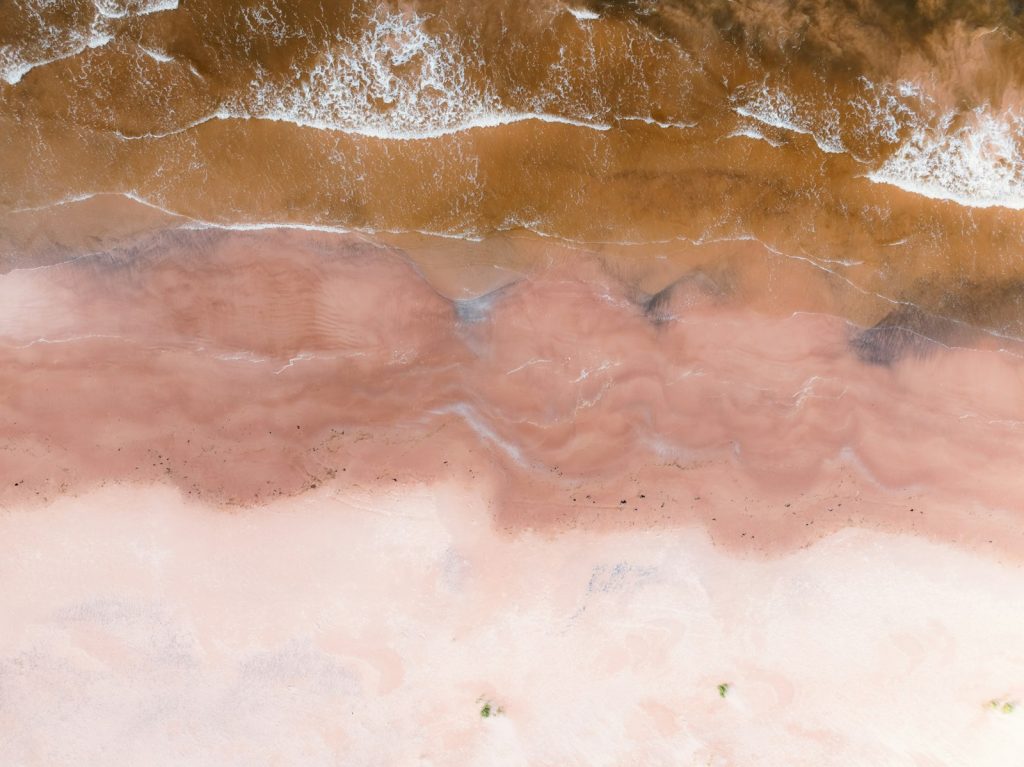
Pink Beach Labuan Bajo is the famous stretch of pale rose sand on Komodo Island that you see on postcards from Flores. It’s real, it is pink – but more “soft blush” than neon highlighter, and that nuance matters for your expectations.
What & Where Is Pink Beach Labuan Bajo, Exactly?
Locally you’ll hear it called Pantai Merah Komodo or simply Pink Beach Komodo. It’s a small sandy bay on the north‑eastern side of Komodo Island, inside Komodo National Park, usually visited as a snorkel and photo stop on day trips from Labuan Bajo.
There is no road access. No village behind it. No hotel on the sand. You can only reach it by boat from Labuan Bajo, then by a short swim or dinghy drop to shore depending on where your captain anchors.
- Local name
- Pantai Merah Komodo
- Island
- Komodo Island (inside Komodo National Park)
- Access
- By boat from Labuan Bajo only
- Typical visit time
- 45–90 minutes as part of a multi‑stop day trip or liveaboard
- Main activities
- Snorkelling, swimming, photos, short sand walk
Why Is the Sand at Pink Beach Komodo Actually Pink?
The colour comes from biology, not magic. The sand at Pink Beach Labuan Bajo is a mix of regular white carbonate sand plus crushed red foraminifera – tiny marine organisms that live in the surrounding coral reef.
The science in simple terms
- Out on the reef, these red foraminifera cling to corals and rubble.
- Waves break and grind that material down.
- Over time, fragments wash ashore and mix with white sand grains.
- Your eyes see that mix as pink, especially in angled light.
On Komodo’s Pink Beach, the red component is strong enough to tint the whole swash zone. Dry sand farther up can look paler; wet sand near the waterline often looks the most rosy.
How pink is “pink” in real life?
Short answer: subtle. Think salmon or dusty rose, not bright Barbie. On a cloudy midday, it can look almost like a regular beige beach with a faint blush. Under morning or late‑afternoon light, the red grains pop more against the turquoise water.
Two things that affect how “wow” it looks on your visit:
- Cloud cover & sun angle – Lower sun and clear skies punch up colour contrast.
- Phone camera processing – Many social photos are saturated. Real life is gentler than Instagram.
I’ve watched more than one visitor step ashore a bit confused because they expected a neon Crayola beach. If you go in understanding this is a naturally tinted shore, not a Photoshop filter, it’s easier to appreciate what you’re seeing.
Where Pink Beach Fits into the Komodo Trip Circuit
Most travellers see Pink Beach as one stop on a wider loop inside Komodo National Park from Labuan Bajo. You don’t usually charter a whole boat just to see Pantai Merah Komodo and come straight back.
Typical day‑trip routes from Labuan Bajo
Exact routes vary by operator and weather, but these combos are common from the harbour in Labuan Bajo:
- Padar Island – Komodo Island – Pink Beach – Manta Point
- Padar Island – Pink Beach – Komodo Village area – Manta Point
- Rinca Island – Pink Beach – nearby snorkel reef (less common; longer transits)
Fast boats from Labuan Bajo tend to include Pink Beach on “iconic Komodo” day tours alongside Padar sunrise or morning hikes, dragon walks with rangers on Komodo or Rinca, and manta snorkelling if conditions allow. Slow wooden boats may run similar loops but with fewer stops due to speed.
If you’re starting to sketch your route, our field team keeps an updated overview of options and timing; you can plan your trip with us over WhatsApp and we’ll lay out sample circuits on a map, no jargon.
How long do boats stay at Pink Beach?
On most shared day trips, expect 45–60 minutes at Pink Beach. On private charters or liveaboards, your captain and guide can stretch that to 90 minutes or more if the group is enjoying the snorkelling and timing for later stops still works.
Time ashore is a blend of:
- Short swim or dinghy transfer to the sand.
- Photos and a walk along the curved bay.
- Snorkelling the reef just off the beach.
- Dry‑off, rinse if your boat has fresh water, then move on.
Best Time of Day & Season to Visit Pink Beach
Lighting: when the sand looks the most pink
Lighting matters more than people think. Here’s how Pink Beach changes through the day in typical dry‑season conditions:
| Time of day | Colour & experience | Pros | Cons |
|---|---|---|---|
| Early morning (before ~9am) | Softer, cooler light; pink is gentle but still visible. | Quieter, cooler air, calmer feel. | Fewer tours schedule this slot; not always practical. |
| Late morning–midday | Harsh overhead light; sand can look pale; water bright. | Common timing on fast‑boat itineraries; good visibility underwater. | Hotter, busier; pink less dramatic in photos without editing. |
| Mid‑afternoon (~14:00–16:30) | Warmer angled sun; pink and turquoise contrast nicely. | Best balance of colour and typical tour timing. | Can still be busy with day‑trip boats in high season. |
| Late afternoon (after ~16:30) | Golden light, strong colour; lovely for photos. | Cooler, softer atmosphere. | Not all boats linger this late; depends on distance back to Labuan Bajo. |
In practice, most shared trips from Labuan Bajo hit Pink Beach in the late morning or mid‑afternoon, depending on whether Padar is scheduled as a sunrise hike or later in the day.
Seasonal differences
Komodo National Park has a marked dry and wet pattern:
- Dry season (roughly April–October) – Typically sunnier, lower rainfall, stronger light. Sea conditions can be choppy in some channels, especially August, but visibility for snorkelling is often good around Pink Beach.
- Transition months (around November & March) – Mixed conditions. You can get very clear days or fast‑moving storms.
- Wet season (roughly December–February) – More cloud, more rain, and occasional trip cancellations or re‑routes depending on sea and wind. On overcast days, the pink looks softer.
Tour boats run year‑round from Labuan Bajo, but some adjust routes or cancel on short notice for safety during stronger weather systems. No one can guarantee sunshine or flat seas; count a really vivid pink beach experience as a bonus rather than a certainty.
How to Get to Pink Beach from Labuan Bajo
Step 1: Reach Labuan Bajo
Pink Beach sits inside Komodo National Park; Labuan Bajo on Flores is your launch pad. You get in mainly by:
- Domestic flight from Bali, Jakarta and other Indonesian hubs.
- Occasional overland or ferry routes if you’re already travelling across Nusa Tenggara.
From Labuan Bajo town, the harbour is a short car or scooter ride away. Many tour packages include pickup from central hotels.
Step 2: Join a boat into the park
There is no public ferry that drops you at Pink Beach. You need either:
- Shared day trip boat – Fast boat or wooden boat with a fixed route and group size limits.
- Private charter – Wooden or speed boat hired for your own group.
- Liveaboard – Multi‑day boat trip sleeping on board, with Pink Beach often included as a snorkel stop.
Prices depend heavily on boat type, group size, inclusions and season. For Komodo day trips that include Pink Beach, recent spot‑checks put shared options roughly in the low to mid USD$ range per person and private charters from the mid‑hundreds upwards per boat (last verified June 2026). Ask clearly what’s included: park fees, meals, snorkel gear, guide, and harbour transfers are not universal.
Step 3: Transfer from boat to shore
Once the captain anchors off Pink Beach Komodo, there are usually two options:
- Swim in – Jump off the boat and swim to the sand. The distance is usually short, but you should be comfortable in open water with mild swell.
- Dinghy/rowboat transfer – Some boats have small tenders to shuttle guests who don’t want to swim.
The bay is generally calm but can have a bit of surge. Lifejackets on shared boats are standard; use them if you’re not confident.
What to Expect On the Beach Itself
Facilities (or lack of)
Pantai Merah Komodo is still essentially a natural beach. Based on recent visits and cross‑checks, you should not expect built facilities like permanent toilets, shops or cafes directly on the sand.
This means:
- Use the toilet before you leave Labuan Bajo or at earlier ranger posts in the park.
- Bring your own drinking water in a reusable bottle.
- Take any trash back to the boat. Don’t leave cigarette butts or plastic on the beach.
Occasionally you may see temporary snack coolers or simple umbrellas in the broader Komodo area, but don’t plan your day around buying things at Pink Beach. Go self‑sufficient.
How crowded does it get?
Komodo Park has grown in popularity. In high season, multiple boats may anchor at Pink Beach at the same time, especially late morning. You’ll still find a patch of sand, but this is no longer a secluded stretch where you’re alone for hours.
Less busy periods:
- Shoulder months just outside peak school holidays.
- Later in the afternoon when some boats have already turned for Labuan Bajo.
If low crowd levels are a priority, consider a private charter that can shift timings around the biggest group windows.
Snorkelling at Pink Beach Komodo
What you’ll see underwater
Just off the sand at Pink Beach lies a shallow reef. It’s not the most advanced site in Komodo – that title belongs to channels and walls with challenging currents – but for easy snorkelling it’s one of the most popular.
Typical highlights include:
- Hard and soft corals in various shapes and colours, some close to the surface.
- Reef fish like damselfish, wrasse, butterflyfish, parrotfish and sergeant majors.
- Anemones with clownfish in spots, if you take time to look carefully.
It’s shallow enough for confident swimmers to see a lot without diving down. On very low tides, some coral can sit close to the surface – mind your fins and don’t stand on living reef.
Safety & conditions
Conditions change daily. Komodo is known for complex currents, though Pink Beach usually sees gentler flow than big channel sites. Still:
- Listen carefully to your guide’s briefing about where not to swim.
- Use a lifejacket if you’re not comfortable in open water.
- Stay within sight of the boat and guide; don’t drift past headlands.
- Watch boat traffic; other tour boats may be moving in and out of the bay.
Visibility can range from fairly clear to milky depending on swell, rain up‑current, and plankton. No operator can promise perfect visibility, but consistently, this reef sits in the “good casual snorkel” category for first‑time visitors.
Responsible snorkelling
The same foraminifera and coral rubble that create the pink sand are part of a fragile system. A few simple habits help keep it from degrading:
- Do not stand on coral, even “dead‑looking” patches.
- Keep your fins up and use gentle kicks to avoid smashing coral heads.
- Do not collect shells, coral pieces or sand in bottles. Removing material, especially red fragments, slowly erodes the colour that people come to see.
- Use reef‑friendly sunscreen and apply it well before entering the water to reduce slicks.
Realistic Expectations: What Pink Beach Is – and Isn’t
Instagram vs reality
Online, Pink Beach often appears:
- Electric pink sand.
- Empty shoreline.
- Unreal turquoise water.
On a typical day out from Labuan Bajo, reality is more like:
- Softly pink sand, sometimes stronger along the wet shoreline.
- Other boats at anchor; sometimes several at once in peak periods.
- Clear, blue‑green water, but affected by weather, tide and light.
That doesn’t make it disappointing; it makes it human‑scale and real. The colour is more special when you understand it’s a slow, natural process, not a saturated filter.
How long to stay
If Pink Beach is your main reason for visiting Komodo, remember it’s a relatively small site. You can comfortably:
- Walk the main curve of sand in 15–20 minutes.
- Spend 30–40 minutes snorkelling the reef area in front.
- Add time for photos and a short sit on the sand.
Most travellers come away satisfied with an hour or so here, especially when it’s part of a larger circuit that might include visiting Komodo dragons, Padar viewpoints and manta rays elsewhere in the park.
Packing List: What to Bring to Pantai Merah Komodo
Essentials
- Reef‑safe sunscreen (apply before boarding; reapply between snorkels).
- Sun protection: hat that won’t blow off, long‑sleeve rash guard or light shirt.
- Swimwear and a quick‑dry towel or sarong.
- Waterproof bag or dry pouch for phone and small valuables in the dinghy.
- Refillable water bottle – many boats now prefer refills over single‑use plastic.
- Mask, snorkel and fins if you prefer using your own; most boats provide basic gear but fit and condition vary.
Optional but useful
- Reef shoes if you have sensitive feet for walking at the waterline (avoid stepping on coral).
- Lightweight camera or action cam with float strap.
- Small first‑aid kit with plasters, antiseptic wipes, seasickness tablets if you’re prone.
- Light cloth bag to keep your gear together on deck.
Including Pink Beach in a Wider Komodo Itinerary
Single‑day vs multi‑day
You can see Pink Beach on both day trips and multi‑day liveaboards from Labuan Bajo:
- Day trip – Good if you’re short on time. You’ll probably combine Pink Beach with one dragon walk and one or two snorkel or viewpoint stops.
- 2–3 day liveaboard – Good if you want slower pace, sunrise/sunset anchorages, and more flexibility around crowds and light. Pink Beach becomes one of many snorkel sites instead of the day’s centrepiece.
There’s no universally “right” choice. It depends on how much time you have in Flores and how sensitive you are to sharing sites with other groups.
Sample flow including Pink Beach
A common shared fast‑boat day from Labuan Bajo might look like:
- Early departure from Labuan Bajo harbour.
- Padar Island hike for the panoramic ridges.
- Komodo or Rinca for a guided dragon walk.
- Pink Beach for snorkelling and photos.
- Manta Point or similar site (conditions permitting).
- Return to Labuan Bajo by late afternoon or early evening.
If you’d like help slotting Pink Beach into a realistic day that matches your pace (kids, older travellers, strong swimmers, non‑swimmers, etc.), our team can sketch out options with timings; just plan your trip with us via WhatsApp and we’ll spell out trade‑offs clearly so you’re not rushed all day.
Environmental Pressures & How Visitors Can Help
Erosion of the pink sand
Over years of field visits, guides have seen small shifts in sand distribution at Pantai Merah Komodo – some natural, some influenced by visitor behaviour. Two key issues:
- Removing sand – Filling bottles or bags with pink sand reduces the very thing people come to see, grain by grain.
- Foot traffic in fragile zones – Repeated trampling of certain edges can accelerate local erosion.
The most helpful thing you can do is enjoy the beach without taking souvenirs. Photos and memories travel better anyway.
Boat pressure & anchoring
Boats anchoring directly on coral can damage reef structures that feed sand creation and snorkelling appeal. Some operators now use mooring points or anchor in sandy patches; ask your crew quietly about their practice. Polite questions from guests nudge the whole system in a better direction over time.
Waste management
Whatever goes overboard – cigarette butt, snack wrapper, broken fin strap – doesn’t vanish. It either washes up on a beach like Pink Beach Labuan Bajo or drifts into the wider marine environment.
On your boat:
- Use the onboard rubbish bins. If there are none visible, ask crew where to put trash.
- Secure light items on deck so they don’t blow away.
- Say no to unnecessary single‑use plastic where you can.
Final Thoughts on Visiting Pink Beach from Labuan Bajo
Pink Beach Labuan Bajo is one of those places where expectation management changes everything. Go in expecting:
- A naturally soft‑pink beach, not a fluorescent fantasy.
- A short, sweet stop as part of a wider Komodo circuit.
- Good, easy snorkelling rather than advanced‑site drama.
- Basic conditions on the sand – no built‑up resort strip.
If you approach Pantai Merah Komodo with that mindset, it usually delivers exactly what it should: a quietly unusual shoreline, a pleasing swim, and a better feel for how alive the geology and biology of Komodo National Park really are.
If you’d like a local pair of eyes on your dates, weather patterns and route options before you lock anything in, you can plan your trip with our Labuan Bajo team over WhatsApp; we’ll help you slot Pink Beach into an itinerary that makes sense for your time and budget.
FAQs about Pink Beach Labuan Bajo
Is Pink Beach really pink?
Yes, but in a subtle way. The sand at Pink Beach Komodo is tinted a soft rose colour by crushed red marine organisms mixed with white sand. Under angled sun and clear skies the colour is more obvious; in harsh midday light or cloud, it can look more like a gentle blush than bright pink.
Can I visit Pink Beach without a tour?
You need a boat to reach Pantai Merah Komodo from Labuan Bajo, and that effectively means joining a tour, chartering a private boat, or booking a liveaboard. There is no regular public ferry stopping at Pink Beach itself, and there’s no road access on Komodo Island.
How long does it take to get to Pink Beach from Labuan Bajo?
Depending on boat type and route, it usually takes a few hours of combined sailing between stops to reach Pink Beach as part of a standard Komodo day trip. Fast boats cover the distances more quickly than traditional wooden boats; your operator or planner should give you a rough schedule for the day.
Is it safe to swim and snorkel at Pink Beach?
Pink Beach is generally considered one of the easier snorkel stops in Komodo, with a shallow reef just off the sand. That said, currents and conditions can change, and you’re in open water. Follow your guide’s instructions, use a lifejacket if unsure, and stay within the designated area near the boat.
Are there toilets or restaurants at Pink Beach?
No. Pink Beach is essentially a natural beach with no fixed visitor facilities. Use toilets before leaving Labuan Bajo or at ranger stations elsewhere in Komodo National Park, bring your own drinking water and snacks, and take all rubbish back to your boat.