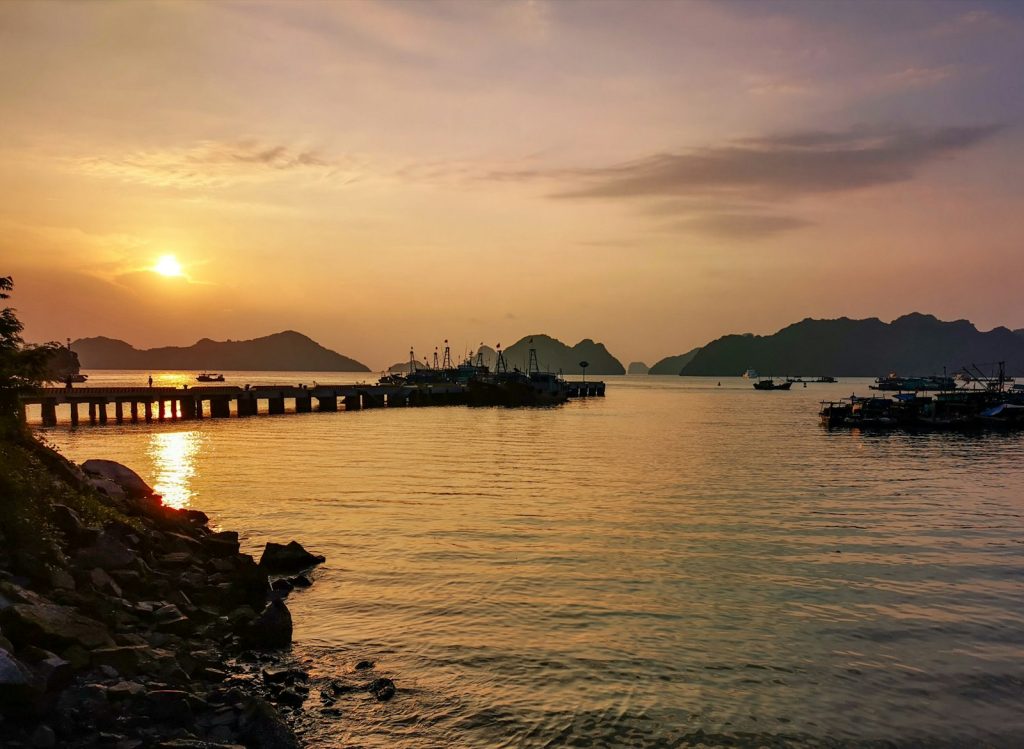
Komodo liveaboard vs day trip is really a question of time, rhythm and how deeply you want to feel the park. A day trip shows you the headline sights; a liveaboard lets you live inside them for a while.
Komodo Liveaboard vs Day Trip: Short Answer
If you only remember one thing, remember this:
– Choose a **Komodo day trip by speedboat** if you have just 1–2 days, get seasick easily, or care most about ticking off key spots and being back in a hotel bed.
– Choose a **Komodo liveaboard / overnight trip** if you have 3+ days, want sunrise–sunset light, quieter sites and a slower, more immersive feel.
From Labuan Bajo, both start early, both can reach the main “postcard” locations, and both can be magical. They just give you very different days.
First, Definitions: What Each Option Actually Is
What is a Komodo liveaboard?
A Komodo liveaboard is an **overnight boat trip** from Labuan Bajo into Komodo National Park. You sleep, eat and move on the boat. Trips usually run:
– **2 days / 1 night (2D1N)** – one night on board, a quick taste.
– **3 days / 2 nights (3D2N)** – the classic length for first-timers.
– Longer (4–7 days) – usually more dive-focused or combining north and south of the park.
Boats range from simple wooden “phinisi-style” with fan cabins to more polished vessels with AC and private bathrooms. You’re not sailing far like Raja Ampat; distances here are moderate, but sea conditions and comfort still matter.
What is a Komodo day trip?
A Komodo day trip is a **single-day speedboat tour** from Labuan Bajo and back. You sleep on land, usually in a hotel or guesthouse.
Most depart between 06:00–07:00 and return mid–late afternoon, roughly 16:00–17:30, depending on sea conditions and the exact route.
You move fast: speedboats skip along the north-central sites of the park. Think “highlight reel”, not “slow documentary”.
What You Actually See: Sites Covered
The biggest myth I still hear on the dock: “You must sleep on a boat to see the good places.” Not true anymore.
Fast speedboats from Labuan Bajo can reach the core circuit easily in a day. The difference is not only **which** sites, but **how and when** you experience them.
Here’s a simplified comparison of what’s realistically possible on standard, shared trips (routes change with weather and park rules; always check your exact itinerary):
| Aspect | Typical Liveaboard (3D2N) | Typical Day Trip (Speedboat) |
|---|---|---|
| Main Komodo dragon island | Komodo or Rinca (often both over 3 days) | Usually ONE: Komodo or Rinca (time-dependent) |
| Padar sunrise hike | Often yes (boat anchors nearby the night before) | Sometimes, but usually means very early departure & fast pace |
| Pink Beach–style snorkelling stop | Almost always, often more than one pinkish beach | Usually 1 beach stop, often the busy “Pink Beach” |
| Manta point | Common, with more flexibility to wait or return if conditions poor | Common, but tighter schedule; less time to wait for better current/visibility |
| Number of snorkel/dive sites | Higher – 2–4 water sessions per day, often at varied sites | Lower – usually 2–3 short snorkelling stops total |
| Remote/quiet spots | More likely; overnights allow early/late visits and off-peak timings | Unlikely on shared trips; schedule sticks to main loop |
| Flexibility | Moderate; still group-based, but multi-day means some adjustments | Low; tight schedule and fuel/time constraints |
For **liveaboard or day trip Komodo**, both can cover:
– One Komodo dragon ranger trek (Komodo Island or Rinca).
– The Padar Island viewpoint (weather and park rules allowing).
– At least one “pink” beach.
– At least one manta/snorkel highlight.
The liveaboard just stretches that over more days and usually adds quieter corners or sunset/sunrise experiences.
Time & Pace: How Each Day Actually Feels
Day trip pace: compressed and busy
On a shared speedboat day trip, a normal rhythm is:
– 06:00–07:00 – Check-in and depart Labuan Bajo.
– Morning – First big stop (Padar or dragons).
– Late morning–early afternoon – 1–2 more land stops plus snorkelling.
– Mid–late afternoon – Final snorkel or beach, then return.
It’s a **lot** in one day. Expect:
– 3–4 hours total on the speedboat across the day.
– Hot mid-day walking on islands.
– Shorter snorkel sessions (often 30–45 minutes each).
– Less “linger and watch” time if something interesting happens underwater or on land.
You get home tired but with clear mental snapshots: Padar ridge, dragons, pink sand, mantas if you’re lucky.
Liveaboard pace: slower, but more constant
On a simple 3D2N liveaboard, the rhythm is more like:
– Early starts for sunrise hikes or early snorkel when light is softer and crowds thinner.
– Two, sometimes three main activities per day (walks, snorkel/dive sessions, beach time).
– Gaps between stops where you move slowly, read, nap, talk, or stare at the horizon.
You still get tired, especially under sun and salt air, but in a different way. The day stretches. You feel the distance from Labuan Bajo, not just the clock.
For **overnight vs day tour Komodo**, ask yourself honestly:
– Do you enjoy full, active days with a lot of movement? Day trip is fine.
– Do you prefer a mix of activity and downtime, without rushing from A to B? Lean liveaboard.
Comfort & Sleeping: Boat vs Hotel Bed
Comfort on board
Liveaboard comfort is wildly variable. The wooden-boat tradition here is strong, but standards differ.
Typical elements on an honest, mid-range Komodo liveaboard:
– **Cabins**: Simple wooden rooms. Some with AC, some fan-only. Don’t expect cruise-ship insulation; you’ll hear engines, waves, sometimes neighbours.
– **Bathrooms**: Shared or private. Often “wet bathrooms” with shower and toilet in one small space; water pressure can be gentle.
– **Common deck**: Shaded area with mattresses/beanbags, where you’ll probably spend most of your waking hours.
– **Electricity**: Usually generator-based. Many boats run AC and power only at certain hours. Ask before booking if you rely on charging gear.
If you care deeply about quiet, soft mattresses and long hot showers, most local liveaboards will feel rustic. Not necessarily bad – just know your threshold.
On a **day trip**, you trade that for:
– A night before and after in a real bed in Labuan Bajo.
– A speedboat seat instead of a long wooden hull bench.
– Less time in marine humidity; your gear and clothes dry better on land.
For travellers with back issues, very young kids, or those who sleep lightly, the comfort argument often leans toward **day trip plus a decent hotel**.
Motion & seasickness
Seasickness is the piece most first-time visitors underestimate.
Some realities:
– The straits between the islands can be **choppy**, especially during transitional seasons and certain tidal states.
– **Speedboats** can ride over chop quicker, but the motion is snappier and louder.
– **Liveaboards** roll more slowly; if the swell is up, the motion never fully stops, including at night.
If you know you are prone to seasickness:
– Day trip: your exposure is intense but limited to one day. You sleep on land. Motion is usually worst on long crossings, not at stops.
– Liveaboard: you might feel mild-to-moderate motion the entire trip, particularly overnight and at anchor.
Practical tips either way:
– Bring the motion medication that works for you; don’t rely solely on the boat’s stock.
– Avoid heavy alcohol, greasy food and strong coffee before departing.
– Pick a seat closer to the centre of the boat, eyes on the horizon.
– Tell the crew early if you feel unwell – they’ve seen it a thousand times and usually help quietly.
If your history with motion sickness is **severe**, a one-day trial by speedboat is safer than committing to 2–3 nights on a rolling hull.
Cost: What You Can Expect to Spend
Exact prices shift with fuel, park fees and boat quality, so only ranges make sense here. These are **rough, typical ranges from Labuan Bajo, last verified June 2026**, for shared trips:
– **Shared speedboat day trip (non-private)**
Often in the range of mid–high **hundreds of thousands to low millions IDR per person**, excluding some park fees and personal expenses.
– **Shared 2D1N liveaboard (simple boat)**
Frequently **a few million IDR per person** including meals, tea/coffee, and basic snorkel gear, but usually **excluding** national park fees and personal drinks.
– **Shared 3D2N liveaboard (simple–mid boat)**
Roughly **higher few million to around ten million IDR per person** depending on cabin type, AC, diving or not, season, and group size. Again, national park fees often extra.
A few nuances:
– National park entry, trekking and snorkelling fees are **per day** inside the park, and they add up. Longer trips = more fee days.
– Private charters scale differently. A small group may find that a simple overnight charter is not dramatically more per person than a good speedboat day trip.
– Budget liveaboards can look cheap on paper but cut corners in maintenance and safety. If an offer seems far below the common market, ask detailed questions.
If you’re on a tight budget and just want the headline views, a **day trip** usually wins on total cost. If you see this as a once-in-a-lifetime visit and can stretch, adding a night or two on a liveaboard often feels worth the extra spend.
If you want help sanity-checking quotes against current norms, we can walk through options via WhatsApp; start with plan your trip and mention your rough dates and budget.
Photography: Light, Crowds and Angles
As a guide-turned-editor who has watched people wrestle tripods on slippery decks for years, this is where **overnight vs day tour Komodo** diverges most clearly.
Day trip photography reality
On a standard day trip:
– **Padar light**: You often reach Padar after sunrise, when light is higher and warmer. Beautiful, yes, but less drama and more people on the ridge.
– **Dragons**: Mid-morning or midday. Dragons can be lethargic in the heat, often resting in shade.
– **Beaches**: Strong midday sun, harsh contrast. Great for the eye, harsh for cameras without filters.
– **Mantas**: Stronger surface glare during late morning; underwater shots need good white balance work.
You’ll still come home with classic shots, especially if you expose for the highlights and accept some blown-out sky. Just don’t expect empty-peak Padar photos on a shared, regular-timing speedboat.
Liveaboard advantages for image-makers
A liveaboard gives you:
– **Sunrise and sunset flexibility**: Boats can anchor near Padar, Kalong and calm bays. You move early, often before day-trippers arrive.
– **Golden hour repetition**: Two or three chances at dawn/dusk instead of one.
– **Quieter sites**: More chances to shoot without people constantly stepping into frame.
– **Charging and backups on board**: If the boat’s power system is reliable, you can offload cards each day. Always check power availability in advance.
For underwater shooters:
– Multiple days mean you can adapt to conditions: focus on mantas one day, shallow reefs another, split shots if the surface is calm.
If photography is a top-three priority for you and your budget/time allow, liveaboard is usually the better canvas.
Wildlife: Dragons, Mantas & Expectations
No format can guarantee wildlife, and any operator saying “100%” is overselling.
Some grounded expectations:
– **Komodo dragons**
Visitors see them most reliably on **ranger-led treks** at Komodo or Rinca. Both day trips and liveaboards almost always include one of these.
Liveaboards sometimes manage to visit **both** islands over several days, giving you a chance to see slightly different behaviour and landscapes.
– **Manta rays**
Manta activity around popular cleaning and feeding sites changes with tides, plankton and currents.
A **day trip** typically has one shot at a manta point.
A **liveaboard** may have flexibility to:
– Wait longer if conditions look promising.
– Return at a different tide the next day if the trip plan allows.
– **Other marine life**
Turtles, reef sharks, healthy coral and fish schools are common. More time in the water (liveaboard) simply increases your chances of varied encounters.
If your main dream is “see at least one dragon and try for mantas”, a **day trip** is usually enough. If your dream is “maximise time in the water and see the range of Komodo’s marine moods”, lean **liveaboard**.
Who Each Option Suits Best
Day trip is usually best for:
– **Short stays**
If you have only 2–3 nights total in Labuan Bajo, a day trip keeps things simple.
– **Families with smaller children**
Many kids handle a long, exciting day better than sleeping on a simple boat with unfamiliar noises and ladders.
– **Travellers wary of sleeping at sea**
If this idea stresses you out, you won’t rest well. A day trip plus a comfortable hotel is kinder.
– **Tight budgets**
You still see dragons, pinkish sand and likely mantas, while controlling total cost.
– **People who want variety**
Do a Komodo day trip, then spend the next day exploring inland Flores – waterfalls, canyons, villages – instead of back-to-back days on a boat.
Liveaboard is usually best for:
– **Divers and serious snorkellers**
The park’s underwater life is one of the richest in Indonesia. More days = more sites = more chances at special conditions.
– **Photographers and videographers**
Sunrise, sunset, repeats of key sites, and quiet hours all matter.
– **People who value slowness and immersion**
If you like the idea of reading on deck, watching flying fish and endless island silhouettes, this is your format.
– **Groups of friends**
Booking a small liveaboard as a group can feel like having your own floating cabin. It’s social in a way a speedboat day rarely is.
– **Those used to basic conditions**
If you’ve done multi-day treks, simple homestays or sailing trips before and enjoyed them, a Komodo liveaboard will probably feel natural.
Safety, Season & Weather
Safety basics
Indonesian regulations exist, but enforcement is uneven. Whichever format you choose, ask:
– Does the boat carry **life jackets for all guests**, visibly accessible?
– Is there a **VHF radio** or other communication gear?
– How long has the **captain and guide** worked in these waters?
– In rough weather, do they **cancel or adjust** departures? (You want “yes”.)
On a liveaboard, also ask:
– How many **engines** and when was the last major maintenance?
– Is there **night watch** on deck while at anchor?
– What are the **maximum guest numbers vs cabin count**?
In rougher seas, smaller speedboats can slap harder; bigger wooden hulls roll more slowly. Neither is “safer” in all conditions – it depends on crew judgement and boat condition.
Seasons and sea conditions
Very broadly (conditions vary year to year):
– **April–June**
Often a sweet spot: relatively calm seas, greener islands after rains, improved underwater visibility.
– **July–August**
Peak dry season and popular for visitors. Winds can be stronger; some days choppier, especially in the afternoons.
– **September–October**
Often excellent for diving and snorkelling. Seas can be pleasant, but transitional weather may bring the odd squall.
– **January–March**
More rain, more chance of trips being cancelled or rerouted for safety. Some boats take annual maintenance breaks.
In rougher or more unpredictable months, the argument for a **day trip** is that if conditions are poor, you lose one day, not three. The argument for a **liveaboard** is that with more days the crew has more flexibility to pick sheltered sites and time crossings.
If you’d like candid, up-to-the-week insight on current conditions around your dates, use plan your trip and we can talk it through on WhatsApp before you lock anything in.
How to Decide in 5 Questions
Ask yourself these, and answer honestly:
1. How many full days do you have in Labuan Bajo?
– **1 full day only** → Take a **day trip** or don’t go into the park this time.
– **2 full days** → Day trip + land day, or **2D1N liveaboard** if you really want the overnight feel.
– **3+ full days** → **3D2N liveaboard** starts to make strong sense if budget and comfort level allow.
2. How sensitive are you to seasickness?
– Very sensitive, often sick on short ferries → safer to try **day trip** first.
– Mild, manageable with medication → both options possible; consider liveaboard but prepare well.
– Rarely sick → choose based on other factors.
3. What’s the main goal of your Komodo visit?
– “Tick off dragons, Padar view, pinkish beach, maybe mantas” → day trip works.
– “Shoot serious photos / dive / snorkel as much as possible” → liveaboard wins.
– “Have a unique experience I’ll remember for years” → both can deliver; overnight has more texture.
4. How important is a land-based bed, shower and AC?
– Very – I struggle to sleep without them → **day trip**.
– Nice, but I’m OK with simple conditions for a few nights → **liveaboard** is on the table.
5. What’s your true budget ceiling, including park fees?
– Keeping total spend as low as practical → **day trip**, maybe with a modest Labuan Bajo guesthouse.
– Willing to allocate more of the trip budget to Komodo and cut elsewhere → consider **overnight vs day tour Komodo** trade-offs honestly and maybe stretch for a solid 2–3 night liveaboard.
Practical Tips For Either Choice
– **Book the right season for your priorities** (calmer seas vs greener islands vs diving conditions).
– **Check what’s included and excluded** – especially national park fees, snorkel gear quality, drinking water, and coffee/tea.
– **Ask for a clear, day-by-day plan** – including approximate departure/return times and which islands you’ll visit.
– **Be realistic about your fitness** – Padar’s steps are short but steep and hot; dragons walks are usually gentle but under the sun.
– **Pack for sun and salt** – long-sleeve rash guard, hat with strap, dry bag, reef-safe sunscreen, basic first-aid.
If all of this feels like a lot to weigh, that’s normal. Komodo is not a simple “hop-on, hop-off” destination; a bit of thinking now pays off out there.
You can send your answers to the five questions above via WhatsApp and we’ll map them against current boats and conditions; start via plan your trip and we’ll reply with specific, no-drama suggestions.
FAQs
Is a Komodo liveaboard worth it for non-divers?
Yes, if you enjoy snorkelling, photography or simply being on the water. Many liveaboards run non-diving trips focused on dragons, beaches and snorkel sites. You’ll still get more time in quiet bays, better chances at sunrise/sunset viewpoints and a stronger feeling of “being in” the park, not visiting it briefly.
Can I see Komodo dragons on a day trip from Labuan Bajo?
Yes. Most speedboat day trips include a ranger-led walk on either Komodo Island or Rinca. You will not explore the islands deeply, but you have a good chance of seeing dragons near the trekking routes and ranger posts, alongside other wildlife like deer, monkeys and birds.
Are Komodo liveaboards safe?
Many are responsibly operated, but standards vary. Always check safety basics: life jackets for all passengers, communication equipment, experienced captain and guide, sensible maximum guest numbers, and a clear policy for bad weather. Avoid choosing solely on the lowest price; proper maintenance and crew experience cost money.
Will I definitely see manta rays on my trip?
No operator can honestly guarantee manta sightings. Conditions change with tides, currents and food availability. Manta points are frequently rewarding, but some days they are quiet. A liveaboard increases your total time at suitable sites, which improves your odds but still doesn’t make them certain.
Should I book a Komodo trip in advance or wait until Labuan Bajo?
In high season, popular boats and the better-run speedboat trips often fill up in advance, especially on weekends. Booking ahead gives you more choice of format and boat standard. In lower-demand periods, you can often find options on arrival, but you’ll have less time to research safety and itineraries carefully.