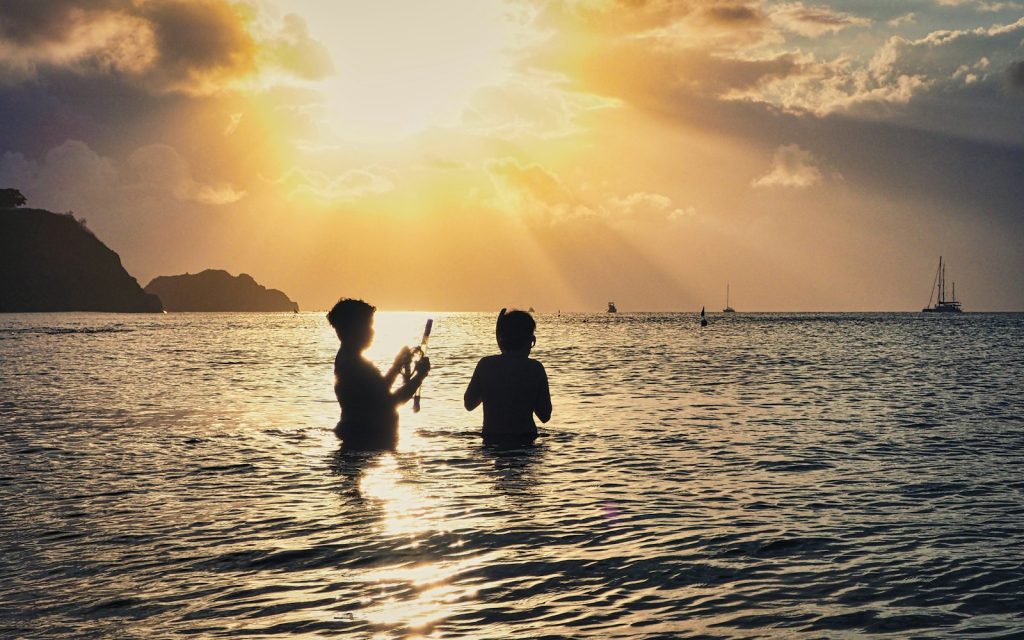
A labuan bajo family trip is a Komodo-focused holiday planned around kids’ needs: safer boats, gentler routes, flexible schedules and realistic dragon walks. Done well, Labuan Bajo with kids can be one of the most memorable family trips in Indonesia, as long as you respect the wildlife and plan for heat, sea conditions and tired legs.
Komodo National Park is not an amusement park. Dragons are wild, the sun is intense, boat cabins are compact. But families go every day, including with toddlers and grandparents, and most have a smooth, happy journey. The difference is in the preparation.
This guide walks through what to expect on a family Komodo tour: safety by age, boats and cabins, private vs shared trips, route ideas for small children and teens, and a practical packing list for kids.
—
Is Komodo Good For Kids?
Komodo with family can be fantastic, if you match the trip to your children’s ages and temperaments.
The honest overview
Komodo National Park is good for kids who:
– Cope reasonably well with heat and early mornings
– Can follow safety instructions closely
– Are okay on boats for hours at a time
It’s less ideal for kids who:
– Hate the sun and get heat rash easily
– Are terrified of animals up close
– Can’t resist running ahead or touching things
Families usually say the same thing afterwards: the dragons were intense but manageable, the boat time was the kids’ favourite, and the hardest part was the heat and early starts more than the wildlife.
Recommended minimum ages
There’s no absolute legal minimum age for entering Komodo National Park with children, but guides and rangers follow practical norms that have evolved over years of trips.
As a local rule of thumb:
– **0–2 years** – Possible on a day trip or calm overnight cruise, but parents must be very confident managing naps, feeding and heat. No dragon trekking recommended; just short, controlled visits to ranger stations, staying well back.
– **3–6 years** – Good for short, carefully selected day trips. One easy dragon walk (Rinca is usually chosen), plus lots of time swimming at safe snorkel spots and sandbars.
– **7–10 years** – Ideal for 1–2 night family Komodo tours with simple treks, snorkeling, and some viewpoint hikes if they’re used to walking.
– **11+ years** – Most standard routes are possible, including Padar sunrise hikes, longer walks and more adventurous snorkeling, if they’re comfortable in the water.
Park rangers have the right to shorten or even cancel a walk based on a child’s behaviour or conditions on the trail. That’s a safety blessing, not a problem.
—
Safety: Boats, Dragons and Ocean With Children
Boat safety with kids
Most family worry starts here, especially if you’re not used to small boats.
Key points:
– **Life jackets:** Ask in advance for child-size life jackets. Many boats have them, some do not. You want one per child that can be snugly tightened.
– **Railings & gaps:** Traditional wooden boats sometimes have gaps in railings. Parents should plan to actively supervise younger kids on deck. For toddlers, a soft carrier can be useful during crossings.
– **Cabins:** Cabins in Komodo boats are small and simple. Expect basic storage, a fan or AC (on some boats), and shared or private bathrooms depending on category. Ask clearly about air-conditioning hours; some budget boats run AC only at night.
– **Sea conditions:** Seas are generally calmer around April–October, with more wind and occasional choppier conditions December–March. Conditions can vary by day; no operator can guarantee a flat crossing. If your child gets seasick, bring motion-sickness medication approved by your doctor.
For very young kids or first-time boaters, choose:
– Larger, more stable boats
– Shorter itineraries (e.g., day trip or one night)
– Routes with less open-ocean exposure
Komodo dragons and kids: how it actually works
Seeing dragons with kids is less about bravery and more about procedure.
On Komodo and Rinca islands:
– Families must be **accompanied by park rangers** at all times.
– You walk in a group, usually with at least one ranger carrying a forked stick.
– Rangers will position families with children in the middle of the group, not at the front or very back.
– You must stay behind the ranger, never approach dragons, and keep noise levels manageable.
Dragons may appear:
– Near the ranger station
– On the walking trails
– Occasionally crossing the path in front of you
The main child-specific risks are:
– **Running:** Small, sudden movement can trigger a chase reflex. Kids must be able to resist bolting.
– **Getting too close for photos:** Children (and adults) love close-ups. Rangers will strictly control distance; expect to be told to move back.
– **Heat exhaustion:** Many parents are watching for dragons and forget the sun. Short breaks, hats and steady water intake matter.
If you have a very active child who struggles to follow instructions, consider:
– Skipping longer treks and just viewing dragons around the ranger area at a safe distance
– Going in cooler hours (early morning)
– Choosing Rinca over Komodo; many families find the walk there slightly easier and the layout more straightforward
Ocean activities with children
The park is full of world-famous snorkeling sites. With kids, the rule is to choose calm and simple over iconic and intense.
Good for families:
– **Shallow, calmer bays and reefs** near the main islands
– **Sandbars** (like Taka Makassar–style spots) for paddling and supervised splashing
– **Simple drift snorkels** only if everyone is comfortable in the water and closely supervised from the boat
More advanced / caution:
– Sites with strong currents (your captain and guide should know which to avoid for families on any given day)
– Deep walls where there’s nothing to stand on if a child panics
– Snorkeling in large crowds of boats where visibility around swimmers is lower
Always ask:
– Will a guide be in the water with us?
– Are there child-size masks and snorkels, or should we bring our own?
– How strong are currents expected to be today?
Lap belts on the speedboat, sun protection, and drinking water breaks between swims are non-negotiable.
—
Private vs Shared Tours for Families
For a labuan bajo family trip, this is the biggest decision: join a shared tour or charter a private boat.
Here’s a clear comparison to help you think it through.
| Option | Best for | Pros | Cons |
|---|---|---|---|
| Shared Day Trip | Small families on a budget with older kids (8+) | Lower cost; social; good if kids enjoy meeting others. | Fixed schedule; limited flexibility for naps or meltdowns; mixed abilities in one group. |
| Shared Liveaboard (1–2 nights) | Active families with older children or teens who travel light | More time in the park; cost split with others; fun “floating hostel” vibe on some boats. | Little privacy; can’t control other guests’ behaviour; cabins may be cramped for a family. |
| Private Day Trip | Families with young kids or mixed ages | Full control of schedule; can shorten or skip stops; nap/shade breaks easy; choose safer snorkel spots. | Higher cost than shared; still a long, hot day for very small kids. |
| Private Liveaboard | Multi-generational trips or families wanting slower pace | Maximum flexibility; custom menus; nap-friendly; can anchor in quieter bays. | Highest cost; must plan more carefully (packing, kid comfort, seasickness). |
Cost ranges (to frame expectations)
Exact prices vary by boat size, facilities, season and inclusion level. As a broad orientation, **last verified June 2026**:
– Shared day trips generally range from budget-friendly per person options up to mid-range prices that include park fees and lunch.
– Private day charters start higher as you pay for the whole boat, with larger boats costing more than smaller speedboats.
– Overnight liveaboards (shared or private) can range widely, from simple bunk-style boats up through more comfortable cabins with AC and ensuite bathrooms.
Ask clearly what’s included (park fees, snorkeling gear, meals, drinking water) and what’s extra (drone fees, upgraded cabins, soft drinks).
If you want expert help weighing itineraries and boats for your family, you can always plan your trip with us via WhatsApp — we help you match real kids to real routes, not just glossy photos.
—
How Many Days in Labuan Bajo With Kids?
Most families find a **3–5 day** stay in Labuan Bajo works well, depending on flight times and how much downtime you want.
A simple framework:
– **2 days / 1 night** – Feels rushed. Best for families already in Flores who just want a quick taste of Komodo (one day trip).
– **3 days / 2 nights** – Enough for one full park day trip, a local land day (caves, viewpoints), and some pool time.
– **4–5 days** – Ideal. Time for a 2-day-1-night family komodo tour plus a buffer day on land to recover between flights and boats.
With very young kids, avoid stacking multiple early mornings and long boat days back to back.
—
Gentler Family-Friendly Komodo Itineraries
Here are sample outlines for different ages. Treat them as templates you can adapt.
Option 1: Day trip – Young Kids (3–7)
**Goal:** Dragons, a safe snorkel, a pretty sandbar, early finish.
Rough outline:
– **06:00–07:00** – Hotel pickup, transfer to harbour
– **Morning** – Boat to Rinca (journey time depends on boat type; speedboats are quicker but more exposed to sun and spray).
– **Rinca short walk** – Stick to the easiest, shortest dragon trek. Focus on seeing a few dragons safely rather than distance.
– **Late morning / early afternoon** – One gentle snorkel stop in a calm, shallow area. Life jackets on; plenty of time letting kids float and watch fish.
– **Sandbar / beach stop** – A quiet patch of sand for digging, shell collecting and shallow splashing.
– **Return to Labuan Bajo** – Aim to be back mid-afternoon, not sunset, to avoid completely exhausting younger children.
Key tweaks for kids:
– Shade breaks built into the plan
– Early lunch (before they crash)
– Skip the more demanding viewpoints
Option 2: 2D1N – Mixed Ages (6–12)
**Goal:** Dragons, snorkeling, Padar views, one night sleeping at sea.
Day 1:
– Morning: Depart harbour, sail to Padar area
– Optional: Short, cooler-hours hike for panoramic views if kids are up to it. Take it slowly; no rush.
– Afternoon: Snorkeling at a protected site, then play on a pinkish or white-sand beach depending on conditions.
– Evening: Dinner on board, simple stargazing from deck, early night.
Day 2:
– Early morning: Sail to Rinca or Komodo for dragon trek (choose the island your guide suggests for current conditions).
– Late morning: Final swim stop, then journey back to Labuan Bajo.
– Arrive back: Mid-afternoon, allowing showers, rest, and an early dinner ashore.
This pace gives one hike, one dragon walk, and several swims without stacking everything in a single marathon day.
Option 3: 3D2N – Teens or Very Active Kids
**Goal:** More snorkeling, more varied landscapes, still family-focused.
– **Day 1:** Padar hike in cooler hours, beach time, sheltered snorkel
– **Day 2:** Dragon island visit, longer snorkeling session at a richer reef, optional gentle drift snorkel if everyone is confident
– **Day 3:** Dawn swim or sandbar visit, slow cruise back with one last snorkel stop
With teens, you can often stretch walk times a bit, add a second short hike, or include more adventurous snorkel sites, as long as currents and conditions are suitable.
—
Choosing the Right Boat Style for Your Family
Think about your family’s needs in four areas: **space, stability, privacy, and facilities**.
Boat types you’ll hear about
Descriptions here are generic; specific configurations vary by operator.
- Open-speedboat (day trip)
- Fast, allows you to see more stops in one day. Less shade, less space for naps. Best for older kids and teens.
- Cabin boat (day trip)
- Slower but with indoor spaces, more shade, and usually a small toilet. Better for younger children.
- Traditional wooden liveaboard
- 1–8 cabins, shared or private bathrooms, indoor and outdoor lounge spaces. Feels adventurous but simple. Great for families comfortable with a bit of rustic charm.
- More modern liveaboard
- Cabins with AC and ensuite bathrooms, clearer layout, sometimes extra safety features like higher railings. Good for multi-generational family groups.
Questions to ask for a labuan bajo family trip
– Is there **AC in the cabins**, and when is it turned on?
– Are there **child-sized life jackets**?
– How many **toilets and showers** are there, and are they shared?
– How much **shade** is available on deck?
– Can the **menu** accommodate children (mild flavours, simple rice/pasta, fruit)?
– Is there a **quiet corner** where a toddler can nap lying flat?
If you’d like help matching your kids’ ages, swimming ability and your budget to a real boat style and route, you can plan your trip with us via WhatsApp. We’re based in Labuan Bajo and see these boats go out with families daily.
—
Best Time for Komodo With Family
Labuan Bajo is a year-round gateway, but some months are better suited to families.
Weather patterns (approximate)
– **April–June:** Often a favourite for families. Seas are usually calmer than deep rainy season, landscapes still green from earlier rains, temperatures warm but not at the peak of the dry-season heat.
– **July–August:** Peak season. More boats, more people at viewpoints, warmer and drier. Good for school holidays but expect crowds and need to book earlier.
– **September–October:** Still dry, a bit quieter than August. Can be very hot; plan for strong sun and hot cabins in basic boats.
– **November–March:** Rainy season, with increased chance of showers and rougher seas on some days. Some operators scale back or adjust routes when conditions are poor.
No operator can guarantee specific weather. Trips sometimes adjust departure times, routes or even cancel for safety if sea conditions turn. That’s frustrating with kids, but it’s the right call.
For smaller children, those April–June and September windows often strike the nicest balance between crowds and comfort, keeping in mind heat is strong all year.
—
What to Pack for Children in Komodo
Packing right makes the difference between a fun adventure and a hot, cranky day.
Essentials for any age
– **Lightweight, long-sleeve sun shirts** – For boat decks and dragon treks.
– **Wide-brim hats with chin straps** – It’s windy on deck.
– **Reusable water bottles** – 1 per person. Most boats provide drinking water but not always individual bottles.
– **High SPF reef-friendly sunscreen** – Creams or sticks often work better on wiggly kids than sprays.
– **Sunglasses with strap** – Glare from the water can be intense.
– **Snacks they love** – Granola bars, crackers, dried fruit; pack more than you think you’ll need.
– **Light scarf or muslin** – Doubles as shade, pillow, or light blanket.
– **Small daypack** – For each adult to carry a child’s gear on treks.
Water & snorkeling gear
– **Rash guards and swim leggings** – Sun protection and less jellyfish worry.
– **Well-fitted kids’ mask and snorkel** – If your child is new to snorkeling, practice at a pool or beach before Komodo.
– **Water shoes or sturdy sandals** – For hot sand and rocky beach entries.
– **Quick-dry towel or poncho** – Boats often have towels but having a child’s own can be comforting.
Comfort and sleep items
– **Light pajama set** – Cabins can be warm even with AC.
– **Favourite small toy or comfort item** – Book, stuffed animal, small game.
– **Earplugs or white-noise app** – Helpful if engine noise is loud near your cabin.
– **Travel pillow** – For napping on deck or in cabins.
Health & safety kit for kids
Always align medication with your paediatrician’s advice.
– Children’s **paracetamol/ibuprofen**
– **Motion sickness** remedies approved for your child
– **Electrolyte packets** – For rehydration if they get overheated.
– **Plasters/band-aids**, antiseptic wipes
– Any personal medications (in original packaging)
– Insect repellent suitable for children (for evenings on deck and harbourside, though islands are often breezier)
—
Labuan Bajo Town With Kids
You’ll likely spend at least one night in town before or after your family komodo tour.
Accommodation considerations
– **Family rooms or connecting rooms** – Many mid-range hotels and guesthouses offer these.
– **Pool access** – A pool day between flights and boats is often your kids’ highlight.
– **Location** – Staying close to the main harbor area shortens early-morning transfers, but hillside places can be quieter.
Food that works for children
Labuan Bajo restaurants usually have:
– Grilled chicken and fish with rice
– Fried rice / fried noodles (can ask for non-spicy)
– Simple pasta dishes in some places
– Fresh fruit juices and smoothies
Not every menu has a labeled “kids’ section,” but kitchens are used to adjusting spice levels and portion sizes for little ones.
Simple non-boat activities
If you have an extra day:
– **Short viewpoints** accessible by car and a brief climb for sunset.
– **Café afternoons** with board games and cold drinks.
– **Grocery run** to stock on snacks before your boat trip.
These quieter land days around your core Komodo experience help kids decompress.
—
How to Prepare Kids Mentally
The smoother your children understand the trip, the safer and calmer it will feel.
Explain the animals honestly
– Komodo dragons are real, wild predators.
– They are not pets or zoo animals.
– We are visiting their home, with rangers who know their behaviour.
Show a short, age-appropriate video beforehand so the first sight on the island doesn’t feel like a shock.
Practice “adventure rules”
Before you come:
– Do short family walks where kids practice staying behind an adult leader.
– Play “freeze” games that train them to stop on a simple word like “stop” or “freeze.”
– Rehearse boat rules: no running on deck, no leaning over railings.
Make it part of the fun: “We’re training to be Komodo Rangers.”
Set expectations about comfort
Make clear:
– It will be hot. Sweaty-hot.
– Toilets may be more basic than at home.
– Boat cabins are cozy, not giant.
Most kids handle this well if it’s framed as an adventure and not as a surprise inconvenience.
—
Planning Your Labuan Bajo Family Trip
Pulling this together, here’s a simple planning order that works well for families:
1. **Fix your dates** – Check school holidays, then look at likely weather windows.
2. **Decide trip length** – Aim for 3–5 days in Labuan Bajo if possible.
3. **Choose core Komodo experience** – One long day trip vs 2D1N vs 3D2N.
4. **Pick boat style** – Based on kids’ ages, budget, and your comfort level.
5. **Add buffer days** – One land day before and/or after boating for rest.
6. **Book flights and accommodation** – Coordinate with your boat schedule.
7. **Prepare kids and packing** – Practice “adventure rules”, check gear and medications.
If you’d like a reality-check on your draft plan or need help comparing options, you can plan your trip with us over WhatsApp. No one can pay to change what we publish; if you proceed with our partner they may pay us a referral fee at no extra cost to you.
—
FAQs: Labuan Bajo With Kids
Is Komodo safe for kids?
Komodo can be safe for kids if you choose the right itinerary, follow ranger and guide instructions closely, and supervise children carefully around boats, trails and wildlife. Rangers may shorten or cancel walks if they feel conditions are unsafe, which is in everyone’s best interest.
What is the best age for a Komodo family trip?
The sweet spot for a Komodo family trip is usually around 7–12 years old, when kids can follow instructions, handle short hikes and enjoy snorkeling. Younger children can still have a good experience with shorter, gentler routes and more downtime built in.
Can toddlers visit Komodo National Park?
Toddlers can technically visit parts of Komodo National Park, but their activities should be limited to safe viewing areas near ranger stations and very calm beach or sandbar stops. Long dragon treks and challenging hikes like Padar are not recommended at this age.
Do we need to be strong swimmers for a family Komodo tour?
No, but it helps if at least one adult is comfortable in the water. Non-swimmers can still enjoy the trip with life jackets and shallow paddling, while confident swimmers can snorkel. Always tell your guide and boat crew honestly about everyone’s swimming level so they can choose appropriate spots.
Should we do a day trip or stay overnight on a boat with kids?
For very young kids or first-time boat families, a private day trip is often the best start. Families with older children or teens who enjoy boats and can sleep through some engine noise often love a 1–2 night liveaboard, as it spreads activities out and feels more relaxed.